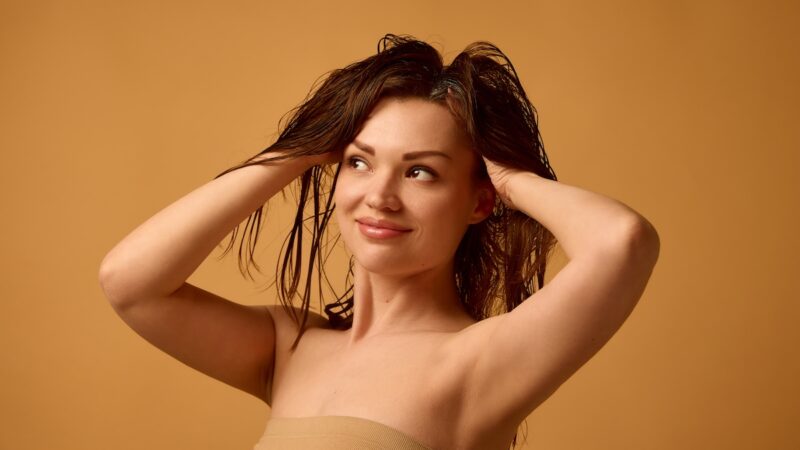
Our experts reveal how to get the most out of scalp massages to protect your hair and promote healthy hair growth.
As a bonus: our video demonstrations – short and to the point, just like any good massage!
Here, we’ll go over a few basic principles and explain exactly how to perform an effective scalp massage.
What benefits can you expect from a scalp massage?
The three main benefits of a scalp massage are as follows:
1. Relieving tension: as we know, stress is the enemy of healthy hair. An effective massage starts at the base of the neck and gradually works its way up from the nape to the forehead. Relaxation guaranteed!
2. Improving blood flow: the scalp is criss-crossed with blood vessels whose role is to supply the hair follicles with the nutrients essential for healthy hair growth. Massage softens the skin and promotes blood circulation, ensuring good oxygenation. The hair is well nourished, its life cycle is supported, and its longevity is ensured.
3. Optimise the effectiveness of your hair care routine: improve the penetration of the active ingredients of your hair care products into the subcutaneous layer, particularly when using a pinching massage technique.
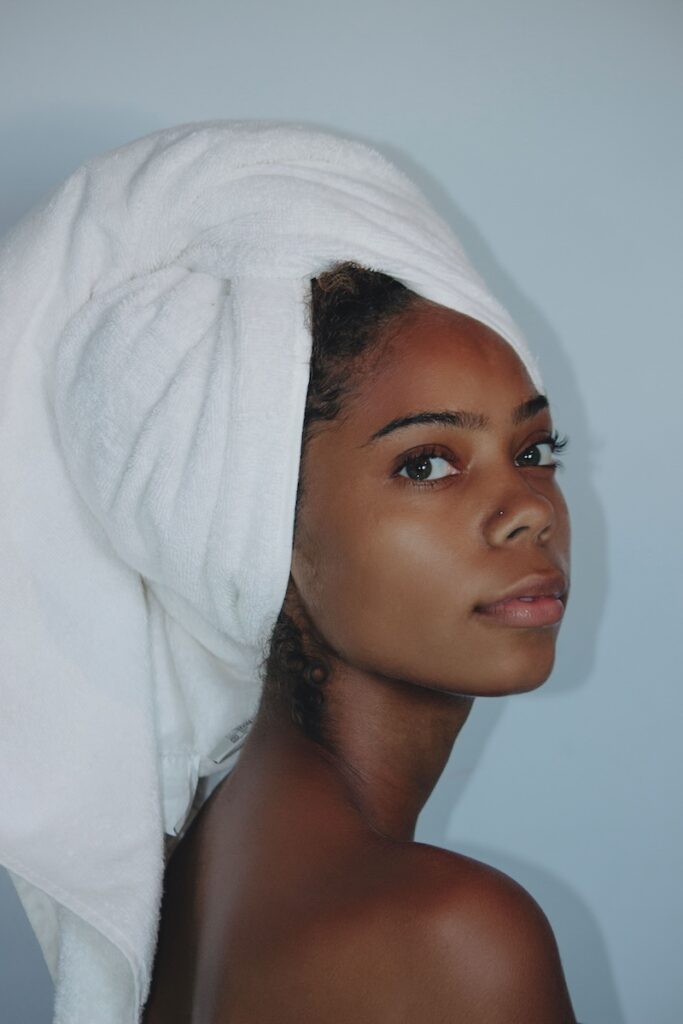
Enhancing the effectiveness of hair care through scalp massage: for all hair types
Is it good or bad to massage your scalp every day?
How often you have a massage depends on your scalp.
As is often the case, it’s all a matter of common sense. If you have an oily scalp, massaging it too often may stimulate sebum production, so there’s no need to overstimulate the sebaceous glands. With a dry scalp, there is a risk of irritation, especially if you choose to massage it dry, without using a moisturising lotion to hydrate the skin.
If you use a pre-shampoo treatment, you can base the frequency of your scalp massages on how often you wash your hair, in the case of a Caucasian scalp.
To cater for the specific needs of Afro-textured hair, which is naturally fragile and prone to dehydration, washing it once a week is by no means essential – quite the opposite, in fact. The right hair care routine for textured hair is to carry out moisturising and nourishing treatments several times a week, depending on the needs of the scalp and hair shaft. The effects of the products (such as a moisturising scalp lotion) are enhanced by massage. You might, for example, wash your hair every 10–15 days. This is an excellent way to make the most of your time and maximise the benefits of your hair care routine!
A daily scalp massage – why not, if:
A daily massage lasting just a few minutes helps you relax, so why not give it a go? Is your scalp tense, difficult to move under your fingers? Whether chronic or the result of a sudden emotional shock, stress causes the neck, scalp and head muscles to tense up. This tension restricts blood flow, leading to poor circulation in the scalp. The result: fewer oxygen and nutrients are carried by the blood vessels to the hair follicles. This leads to a sensation of a tight scalp, or even unbearable pain (the skin «pulls»).
Dry massage or not?
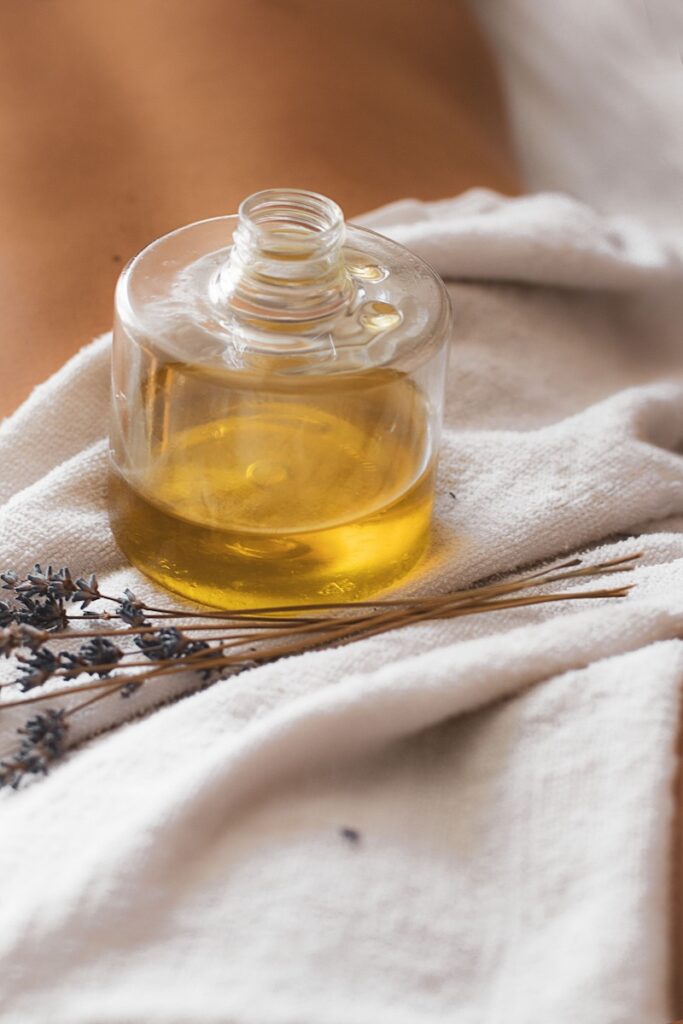
Using a vegetable oil, an essential oil or even a complete haircare product to enhance the effectiveness of your scalp massage is a good idea.
An oily scalp will benefit from the application of a sebum-regulating treatment containing purifying active ingredients; a scalp that is too dry or dehydrated will benefit from a little moisture thanks to the emollient properties of a plant-based oil (wheat germ oil, sweet almond oil).
Scalps prone to dandruff, those with oily or dry skin will find an effective solution by applying a specialised treatment complemented by massages (using the fingertips) to help loosen dandruff and other flakes. In this case, leave the scalp treatment on for a while, then rinse and wash your hair with shampoo. The anti-hair-loss properties of certain essential oils, such as rosemary, will be enhanced by a massage, which will help the oil penetrate the skin.
However, take care when applying pure essential oils to the scalp, which is a sensitive and naturally highly receptive area. If this is your first time, remember to carry out a sensitivity test beforehand. Of course, the effect of an essential oil varies depending on whether it is used on its own, in its pure form, or in combination with other ingredients as part of a hair care product.
An alternative is to massage the scalp whilst it is wet, whilst shampooing: the skin is warm, the pores are dilated, and blood flow is therefore optimised.
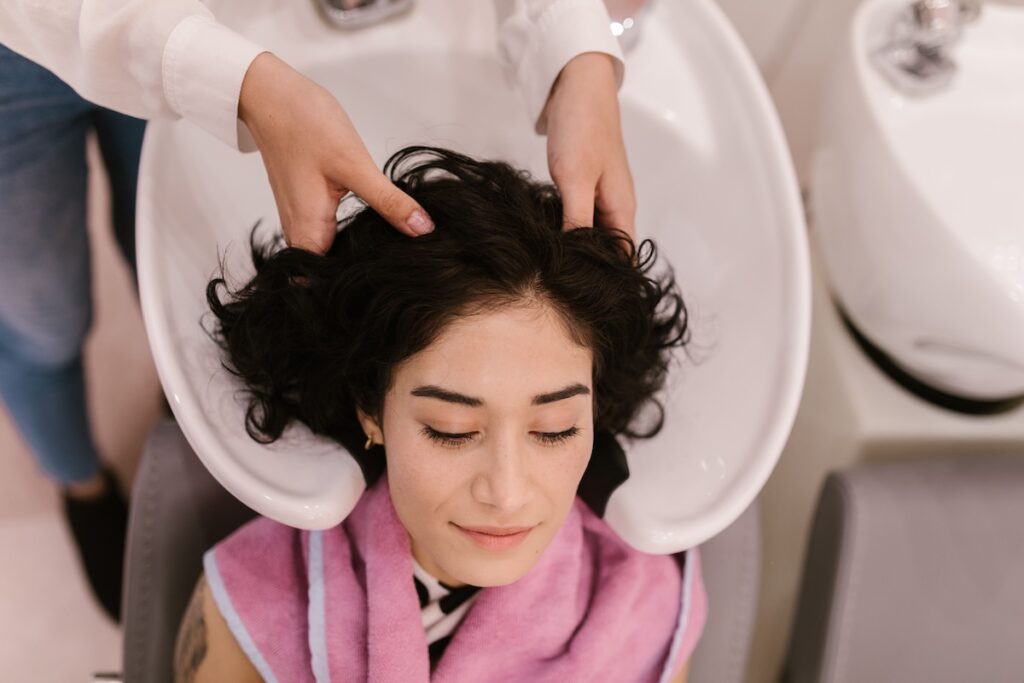
Before, during or just after shampooing, on dry hair or with a hair treatment, or using an essential oil: it’s up to you to choose your favourite massage
An effective scalp massage: how do you do it?
At Clauderer, massage forms part of your treatment programme. During the hair assessment, we will show you how to perform two types of scalp massages specially designed to stimulate cell activity and activate the hair follicles – essential for healthy hair growth.
The right things to do for a successful scalp massage: work from the nape of the neck towards the top of the head and then down to the forehead.
Place your hands flat against the scalp, not on the hair.
- Mobilisation Massage : As its name suggests, this step precedes the application of Clauderer treatments and prepares the scalp. This is the activation phase. Using steady, circular movements, move your fingers (the pads of your fingers) across the entire scalp. Effect: soothes, relaxes and softens the skin
- Pinching Massage : This more invigorating technique aims to enhance the penetration of active ingredients and stimulate the network of blood vessels. With your hands flat on the scalp, a few centimetres apart, bring your hands closer together with sharp, steady movements. Effect: invigorating, revitalising, stimulating.
A word of advice: : Do not use friction; the idea is not to rub the hair but to place your hands on the scalp (the skin) beneath the hair and slide your fingers to move the scalp. At first, especially if you’re tense or stressed, the skin is difficult to pinch and feels «stiff». Gradually, as you continue with the massages, the skin becomes more supple as blood flow improves. Hair, especially if it is fine, tends to become tangled, so there’s no point in making the problem worse. If done incorrectly, a scalp massage can have the opposite effect to what you’re aiming for: an overstimulated scalp, tangled hair and an increased risk of breakage.
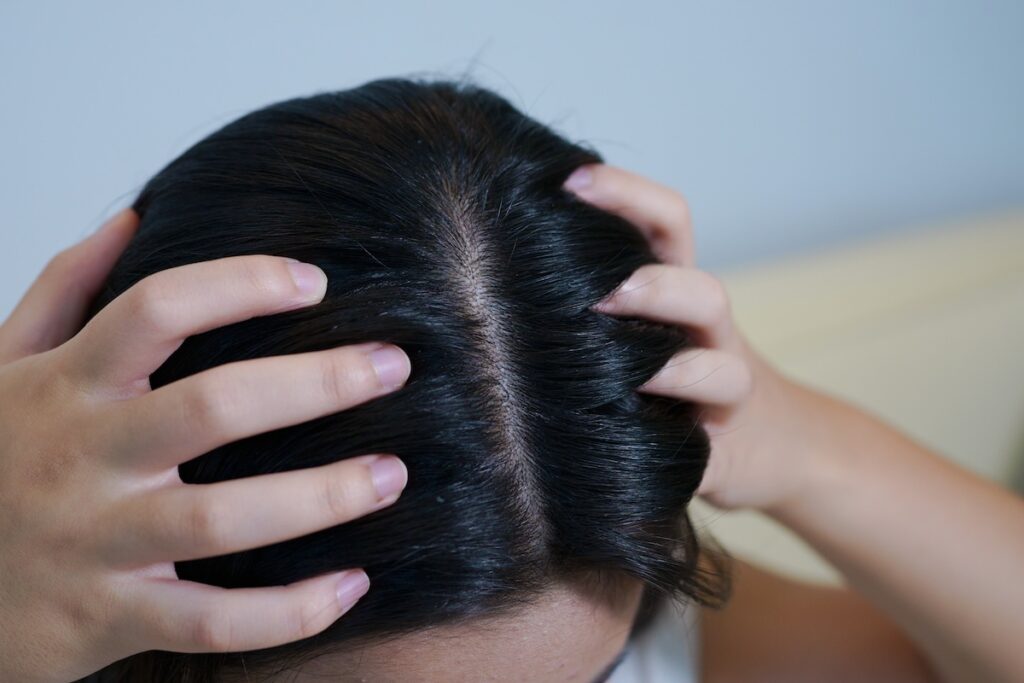
The correct technique: hands flat, firm pressure. The aim isn’t to tickle the scalp!
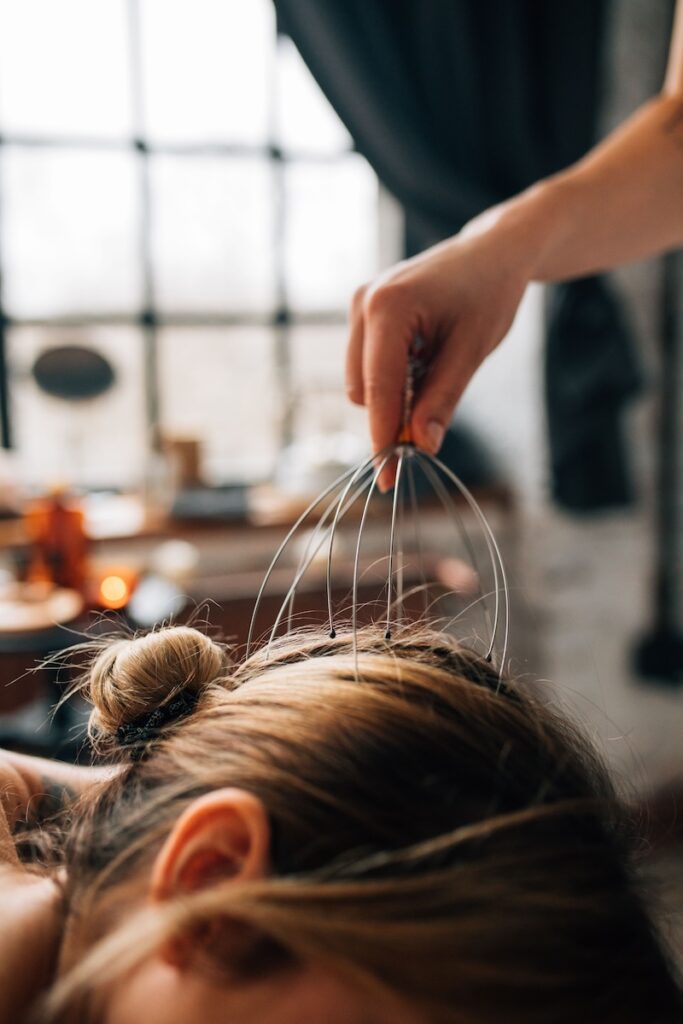
You shouldn’t rub, but you shouldn’t stroke either: your hand must be firm, and the first few massages may even be a little painful when the skin is very taut.
A good massage doesn’t have to last 20 minutes! A few minutes are enough to treat the whole scalp. Ideal duration: it depends on how it feels, but an effective massage lasts between 2 and 3 minutes.
Some people recommend having a massage whilst lying upside down to encourage blood flow: it’s a nice idea, but certainly not essential!
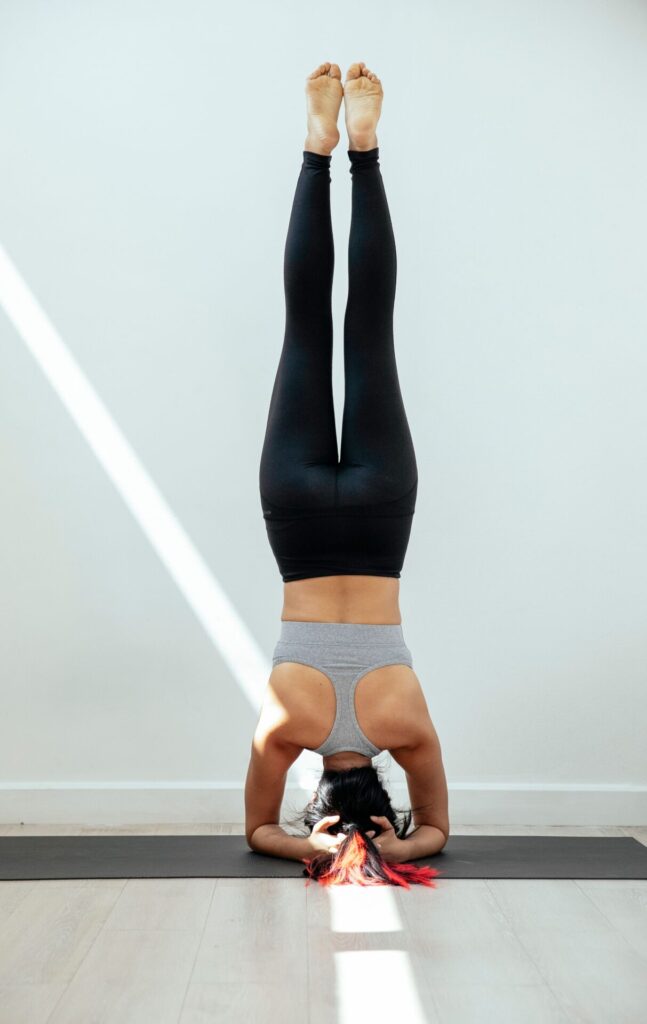
You don’t need to do a headstand to enjoy a great scalp massage!
One last piece of advice : Your fingers remain the best tool for massaging the scalp – they allow you to reach all areas, control the pressure, and so on. However, if you have joint problems, for example, you can use massage brushes. If possible, avoid micro-needling as, if used incorrectly, these small tools can cause bleeding and micro-lesions on the scalp.
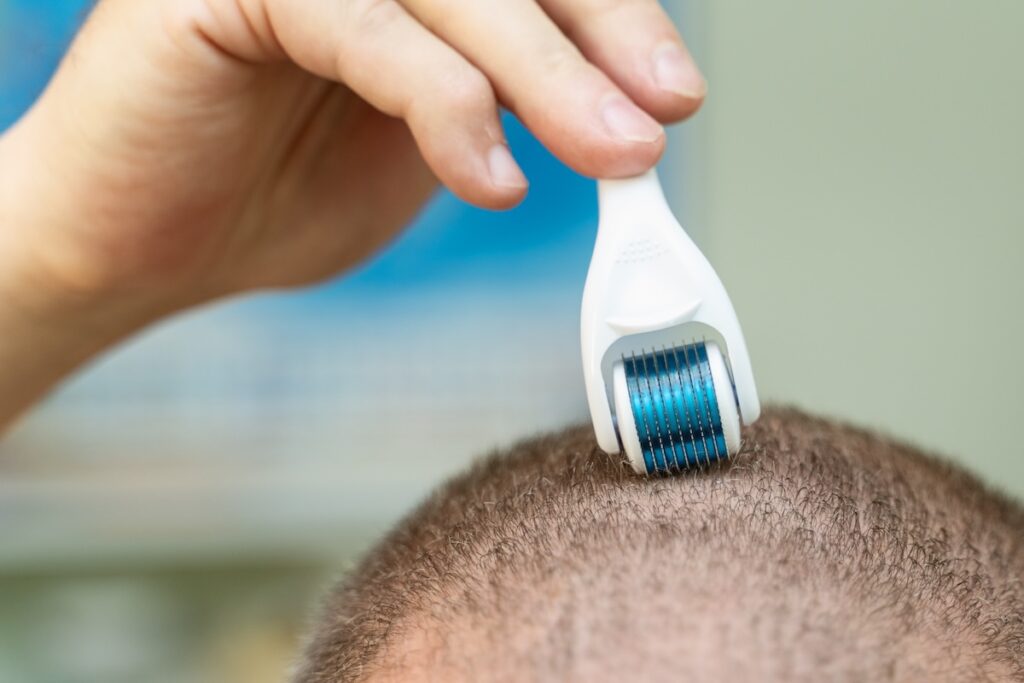
Sensitive or irritated scalp: be careful with certain massage tools, as they may do more harm than good
Whether on its own or combined with your haircare products, a scalp massage is a valuable ally in a successful haircare routine.
And because pictures say more than words, here are our videos:
Jean-François Cabos is the creator of a unique hair care method based on the research he coordinated, which led to the publication of the book Hair, Roots of Life with Hélène Clauderer published by Robert Laffont (Collection "Réponses/ Santé").

