
Textured, wavy, curly, kinky, type 3b or 4c… Afro or mixed-race hair differs from so-called Caucasian hair in many ways, with the degree of curliness being just the tip of the iceberg.
Understanding how textured hair differs from Caucasian hair enables you to look after it with full knowledge of the facts. In this article, the Clauderer Specialists provide an overview of what makes Afro hair unique and offer their expert advice on how to look after it with ease.
Is frizzy hair just like any other hair?
Whether it’s curly, coily, very coily or kinky, despite its varied appearance, Afro hair does share certain common characteristics. Understanding exactly what sets Afro hair apart from other hair types is the first step towards an effective hair care routine.
The basics: Afro hair is just like any other hair: it is made up of a keratin fibre (medulla, cortex, cuticle) that grows from its matrix, the hair follicle. The hair fibre is protected by a lipid film – in other words, sebum – produced by the sebaceous glands, which coats the scalp and the hair shaft.
2 key characteristics of Afro hair:
- Textured hair does not grow straight but at an angle to the scalp; it grows in «spirals» (curls) in order to form a tight covering over the scalp and protect it from UV rays. Curls weaken the hair’s structure. The tighter the curl, the more fragile the hair is.
- Sebum is produced in small quantities, resulting in naturally dry skin and hair strands that easily become dehydrated. The result is a flaky, irritated scalp, dandruff, and dry or very dry hair that breaks easily.
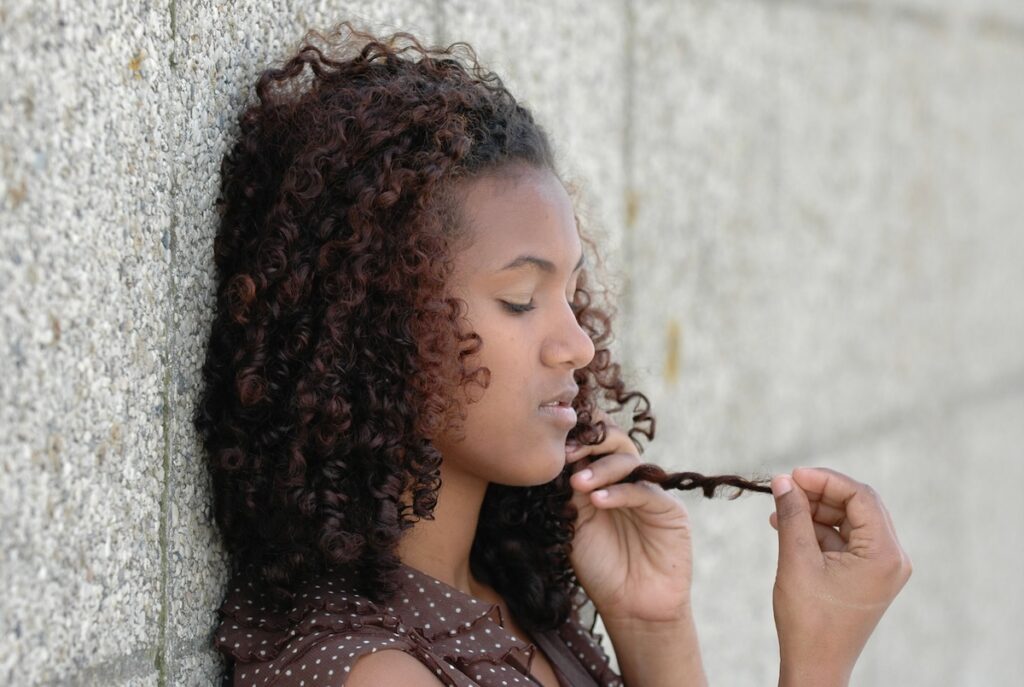
Afro hair: specific needs
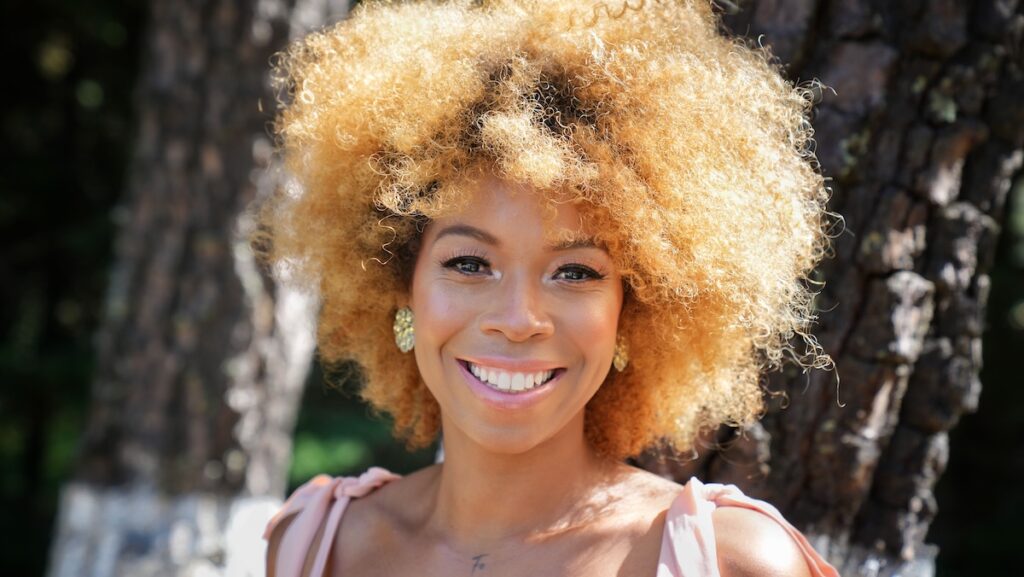
Types of Afro hair, porosity: what is it for?
To be honest, not much at all! In fact, the classification ’Hair type’ is essentially a marketing gimmick invented in the 1990s. As for hair porosity, the ‘glass of water’ test had its moment in the spotlight but is, thankfully, starting to fade from view. Textured hair is naturally dry (due to insufficient sebum); its cuticles tend to open easily, allowing what little natural moisture there is to escape. Moisturising and, above all, sealing in that moisture is the key to beautiful curly hair, whatever their curl pattern, whatever their porosity level.
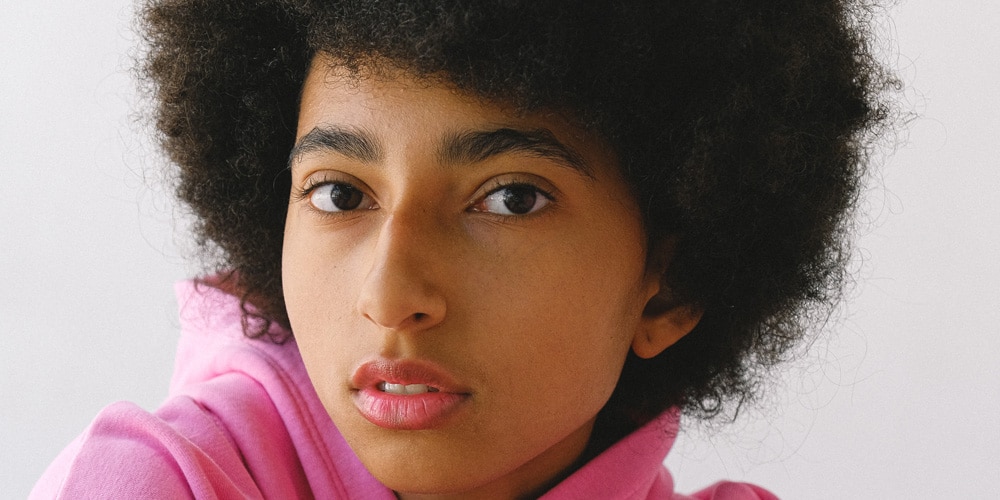
Should straightening and relaxing be banned from an Afro hair care routine?
Cosmetic treatments such as straightening or relaxing are often the go-to solution when you can no longer manage your afro hair. Whether it’s saving time on styling or improving your appearance, straightened or relaxed hair seems easier to manage. Why not? But you should be aware that such treatments involve applying chemicals of varying concentrations to the hair, which destroy its very texture: the disulphide bonds. This process is irreversible on the treated section. As the hair grows out, the junction between the curly and straightened sections is often very fragile, and breakage can be severe. The solution? If you simply can’t do without it, space out the treatments: twice a year at most. In between, moisturise, repair and nourish your hair!
Wearing a wig: yes or no?
Whether it’s to conceal excessive hair loss or simply for fun, a wig is an appealing and practical option. There are a few things to bear in mind, however: quality is key. Good hygiene is also essential: air the wig, brush it and wash it regularly to prevent the build-up of bacteria. Let your scalp breathe as often as possible.
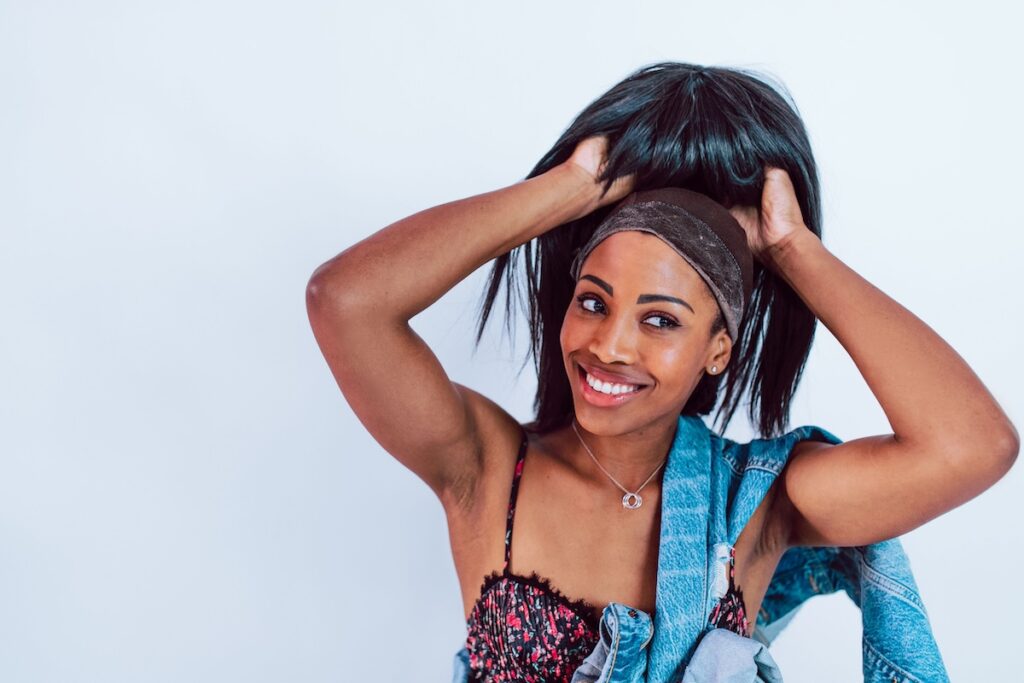
Look after your wig just as you would your own hair
Oil bath or no oil bath?
Incorporating an oil treatment into your hair care routine is an excellent idea, as Afro hair is naturally undernourished. Top tip: Set aside 30 minutes or more once a week to look after your hair. Apply the oil or oil blend, working it through strand by strand, but never onto the scalp. Leave it in for at least 30 minutes, or longer for an effective deep treatment. Rinse, then wash with a gentle, non-stripping shampoo. Follow with a leave-in treatment or a water-and-oil spray to complete the beauty routine. Soft, well-nourished hair guaranteed! Good oils include: coconut, argan, jojoba, shea and olive… either on their own or combined with vitamins and essential oils in cosmetic products (such as Clauderer’s Baume 56, for example).
Which shampoo is best for frizzy hair that’s often too dry?
A false good idea: washing your hair several times a week with a standard shampoo. A conventional shampoo is too harsh; it acts like a detergent, and the more it lathers, the worse it is.
Great idea no. 1: a beauty treatment cream to cleanse and nourish at the same time
Another great tip: space out your washes and only wash your hair every 10–15 days. That’s enough. Give it a go and you’ll see.
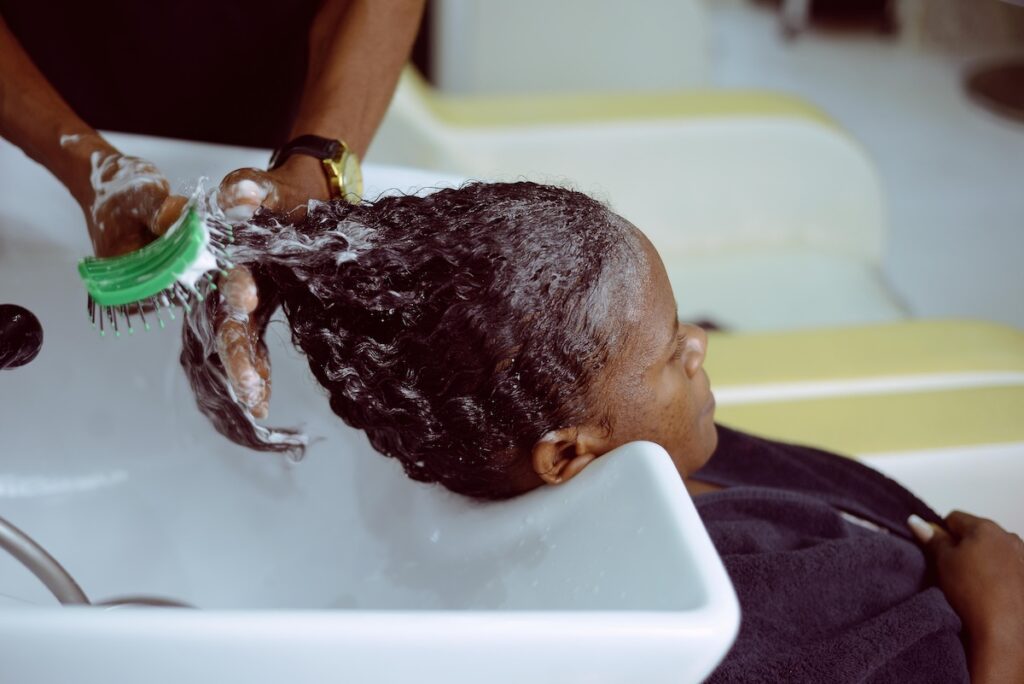
Excessively dry hair: what if shampoo was already a treatment in itself?
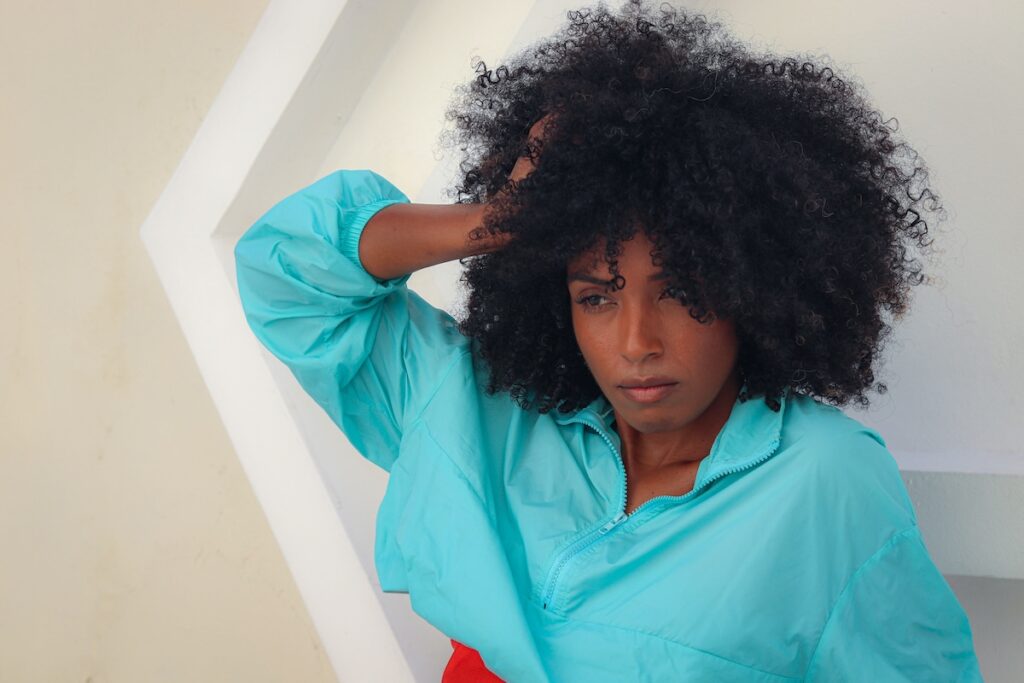
Why doesn’t frizzy hair grow (quickly)?
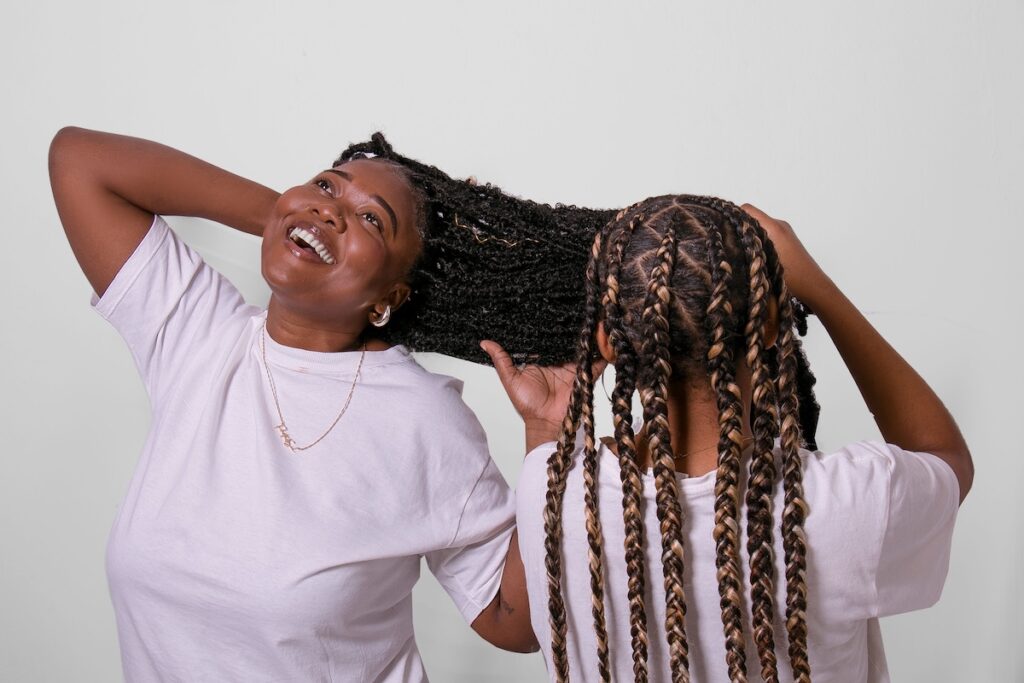
Confusing a fall with breakage. is the source of this urban myth. All hair grows, including Afro hair! It grows at a slightly slower rate than Caucasian or Indian hair – around 0.8 cm per month – but a curl appears visually shorter than a straight strand of hair. Furthermore, textured hair is fragile, and becomes even more so when subjected to excessively tight hairstyles, heavy hair extensions or treatments that damage the hair shaft: breakage is then inevitable. We refer to hair loss when the hair bulb falls out along with the hair: traction alopecia is a common cause of hair loss in Afro hair, although this condition affects all hair types. All scalps can also experience hereditary hair loss (particularly in men) or hair loss caused by medication. Unfortunately, breakage and hair loss can occur together.
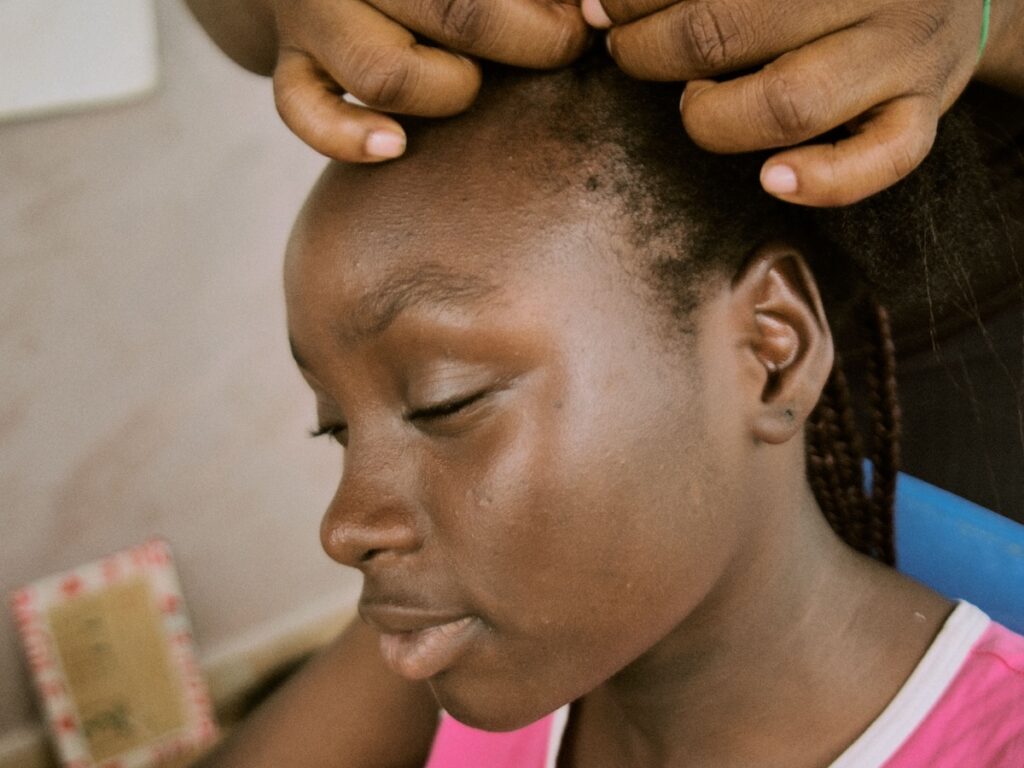
Traction alopecia, hair breakage, male pattern baldness: textured hair is not spared, even though it is so fragile

How do you detangle frizzy, very curly hair?
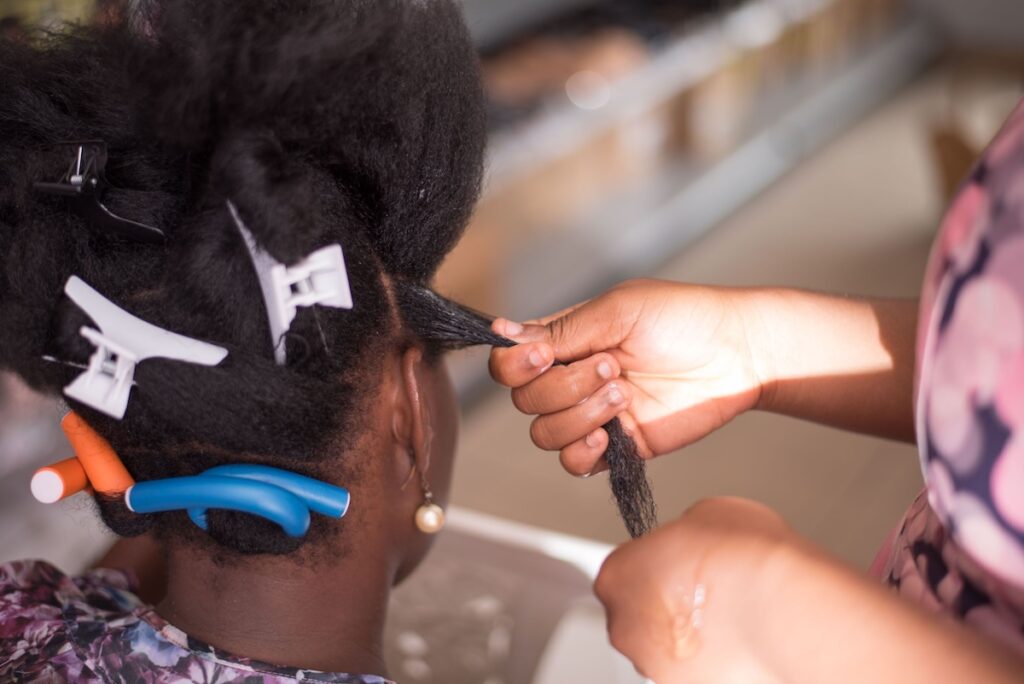
Start with wet hair, working section by section. Using a wooden or horn comb (it’s made of keratin, just like hair!), with wide teeth, gradually work your way up from the ends to the roots.
Make the night your beauty ally
If your hair is a bit long, plait it into loose braids. Keep your hair moisturised by wearing a scarf or a natural silk hair cap (silk is a protein, just like the hair fibre); avoid cotton, which absorbs moisture. Finish off with a silk pillowcase.
The best advice for afro hair?
Soft, shiny hair and well-defined curls are possible, provided that you’moisturise moisturise moisturise. Of course, you should drink plenty of water regularly, but textured hair needs an extra daily dose of moisture. The best way to do this? Spray a light mist of spring water onto your hair every day using a spray bottle. You can add 1 spoonful of vegetable oil to your spray bottle. After hydration comes repair: nourishing damaged hair fibres involves applying suitable treatments to the lengths, choosing a light or richer texture depending on the condition of your hair. Finally, and this is Clauderer’s philosophy: there can be no beautiful hair without a healthy scalp, so a massage to soften it and stimulate microcirculation, followed by a purifying lotion to cleanse it and remove impurities (dandruff,, cosmetic residues), and there you have it!
Simply beautiful hair
Long neglected or even completely ignored by mainstream haircare brands in Europe, Afro hair is finally finding its place in the vast haircare market. Dedicated product ranges are emerging, raising awareness of the specific needs of curly hair – and that’s a good thing. The Clauderer Centre wasted no time in offering specialised hair care and to promote natural beauty for textured hair.
Jean-François Cabos is the creator of a unique hair care method based on the research he coordinated, which led to the publication of the book Hair, Roots of Life with Hélène Clauderer published by Robert Laffont (Collection "Réponses/ Santé").
