
What is the hair root? For most people, when we talk about «roots», we often think of the first few centimetres of hair on our scalp. We go to the hairdresser to have our roots touched up, we talk about greasy roots, and so on… But a hairdresser… or a Clauderer specialist 😉 won’t have quite the same definition.
Here, the Clauderer specialists address the issue of hair roots in five key points.
Hair root – what are we talking about?
For a hair professional, the term «root» refers more to the invisible part of the hair, the part that lies a few millimetres beneath the epidermis and which can only be seen when the hair falls out. Root or bulb? Generally speaking, the terms ‘root’ and ‘hair bulb’ can be used interchangeably to refer to the living part of the hair that grows within the hair follicle. To be more precise, the bulb is the lower part, the base, of the hair root. When the hair falls out, it is this small protrusion that you can feel under your fingers – a sign that the hair has reached the end of its life cycle and has become completely detached from its follicle.
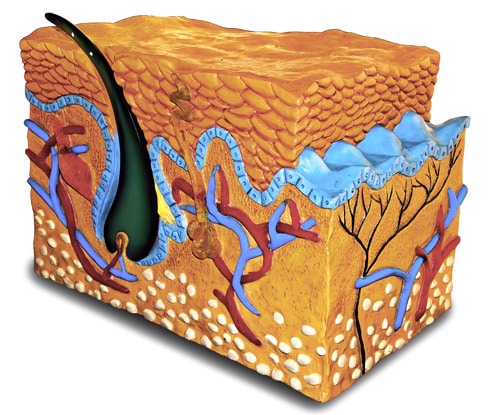
Diagram of the hair root
The hair root is alive
The root is made up of keratin cells that are arranged in layers, much like the tiles on a roof. It is the hair follicle that produces the hair, layer by layer, thanks to the nutrients transported by the scalp’s particularly dense network of blood vessels. It is a lengthy process: it takes around four months for a hair to reach the scalp, and several years for it to reach maturity! We refer to the hair’s life cycle because hair follows a fixed rhythm and a fixed growth rate (which is genetically programmed). It is generally considered to consist of three distinct phases: anagen, catagen and telogen. On average, one follicle produces just one hair at a time on a continuous basis. The number of hair follicles – and therefore the number of hairs – is also genetically determined. From the very first months of pregnancy, the number of hair follicles – and therefore the number of hairs – is already definitive. We’re talking about 100,000 to 150,000 follicles that we’ll need to look after throughout our lives!
Baldness, hair density, colour, quantity and texture: you can’t escape your family!
How can you tell if a root is a good one?
Certainly not with the naked eye!
At Clauderer, measuring hair roots under a microscope enables an objective diagnosis of hair condition to be made, based on four criteria:
- Curve : this refers to the thickness or roundness of the root. What really matters is the ratio between the diameter of the root at its widest point and the diameter of the hair shaft. The higher the ratio, the more likely the root is to anchor itself firmly in the scalp. It will therefore be more likely to survive for a long time. To understand this properly, imagine the difference between a pin and a needle. Because its head is wider than its shaft – regardless of the initial measurement – the pin will remain stuck and will not pass through a piece of fabric, unlike the needle.
- Irrigation : Irrigation refers to the supply of nutrients via the bloodstream. The better the root is irrigated, the healthier it is. This is fundamental.
- Cleanliness : the absence of cellular waste and impurities that hinder hair growth
- Sign of regrowth : Once it reaches the dormant or telogen phase, the hair root detaches from its hair follicle within a few weeks, making way for a new hair root. This sign of renewal indicates that a new hair is already ready to take over. When everything is going well, hair renewal continues for an average of 20 to 25 complete cycles. That’s enough to keep your hair for over 100 years!
NB: The five images below are taken from our database.
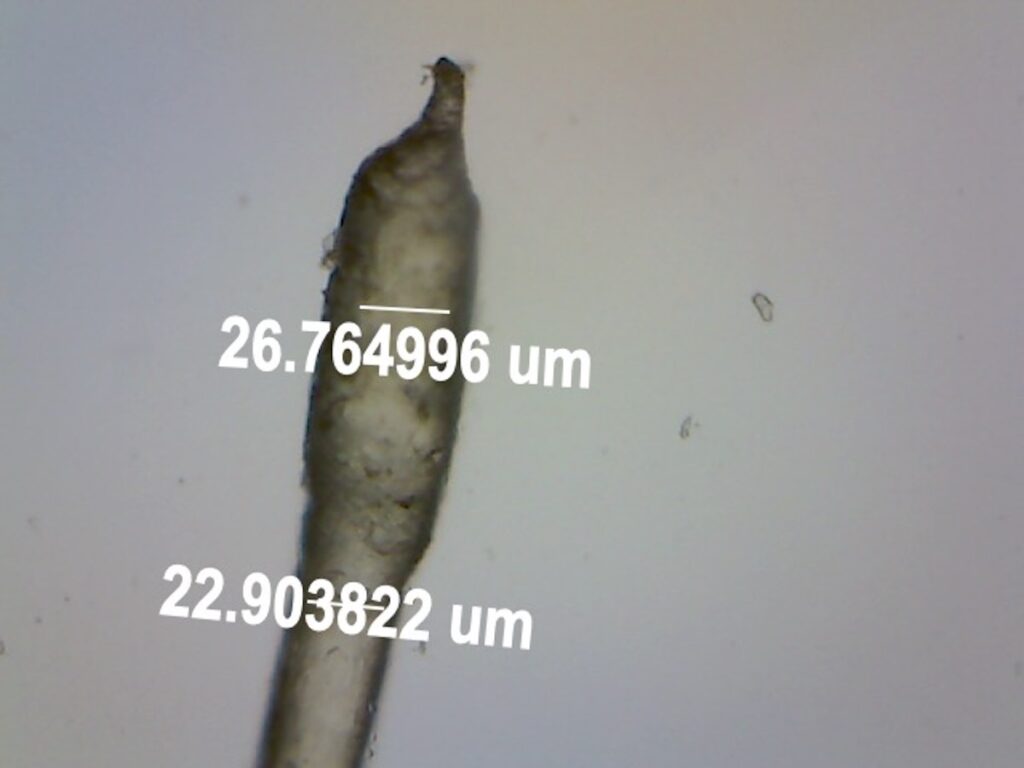
Comparison between one weakened root and one strong root: curvature and irrigation are key factors
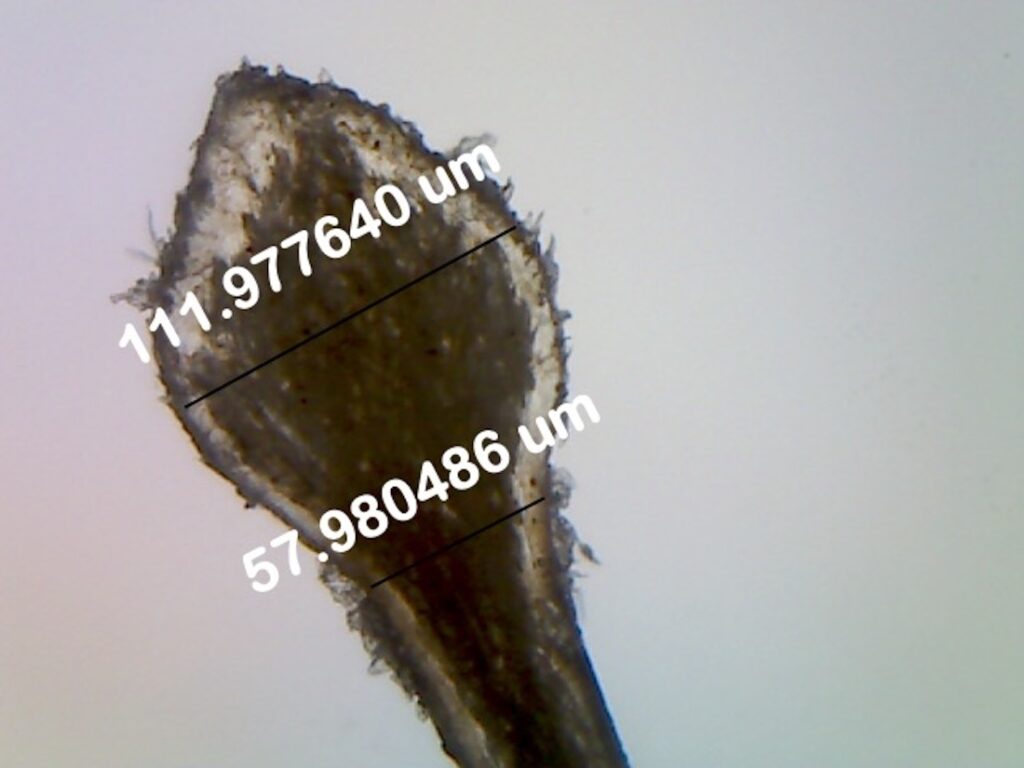
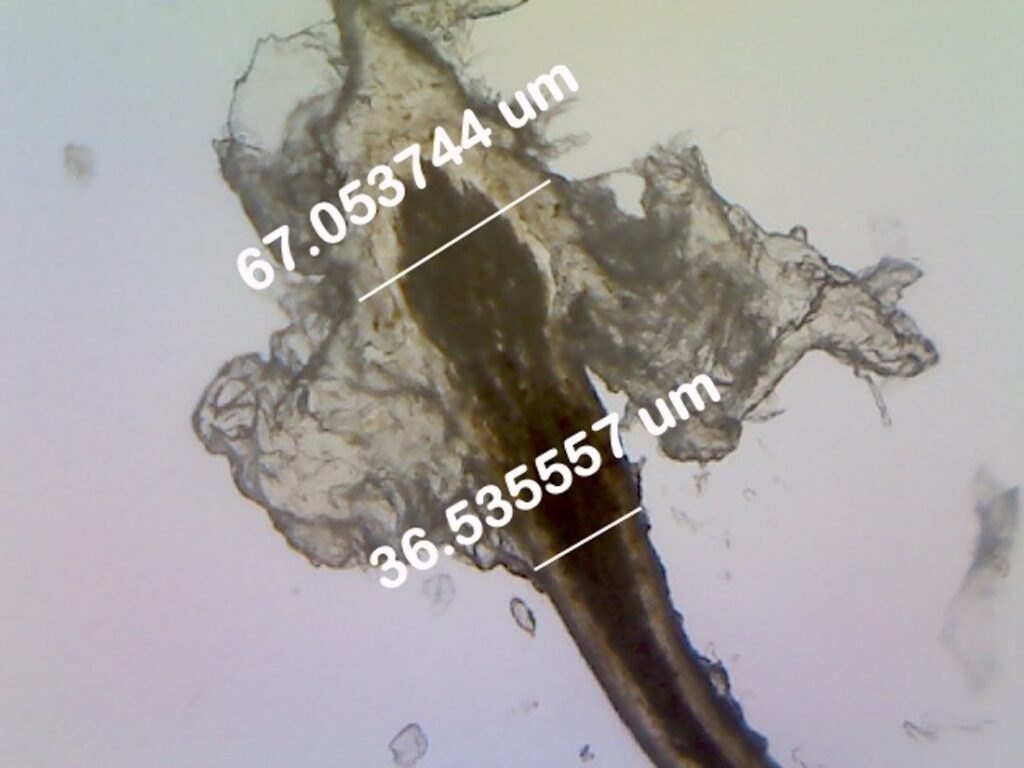
How impurities clog the root. When the impurities are reduced, the root grows easily, and signs of regrowth are evident
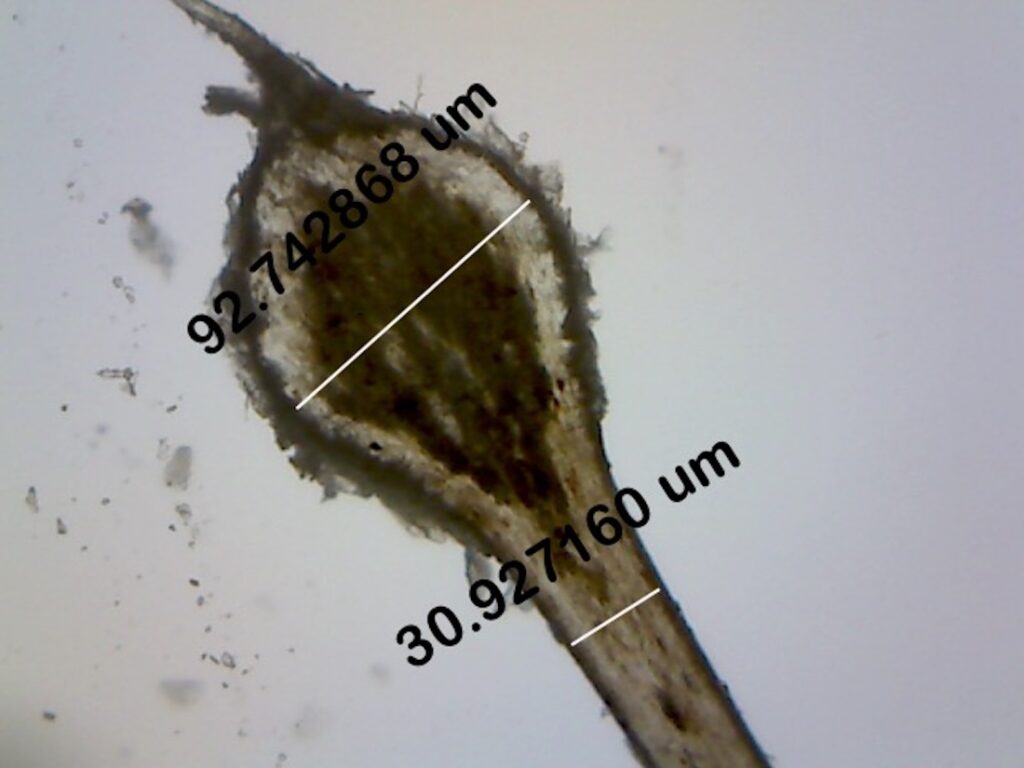
GOOD TO KNOW : There is no ideal size, nor is there really a maximum size for a root. It is not the size that matters, but the combination of the factors mentioned above that determines the health of a hair. The ratio is a key concept: rather than a thick root with a low root-to-shaft ratio, it is better to have a thinner root but with a high root-to-shaft ratio – from single to double, or even more. In other words, you can have fine hair with a perfectly shaped and well-nourished root that grows perfectly and without any problems. Conversely, thick hair with a weakened root will inevitably become thinner.
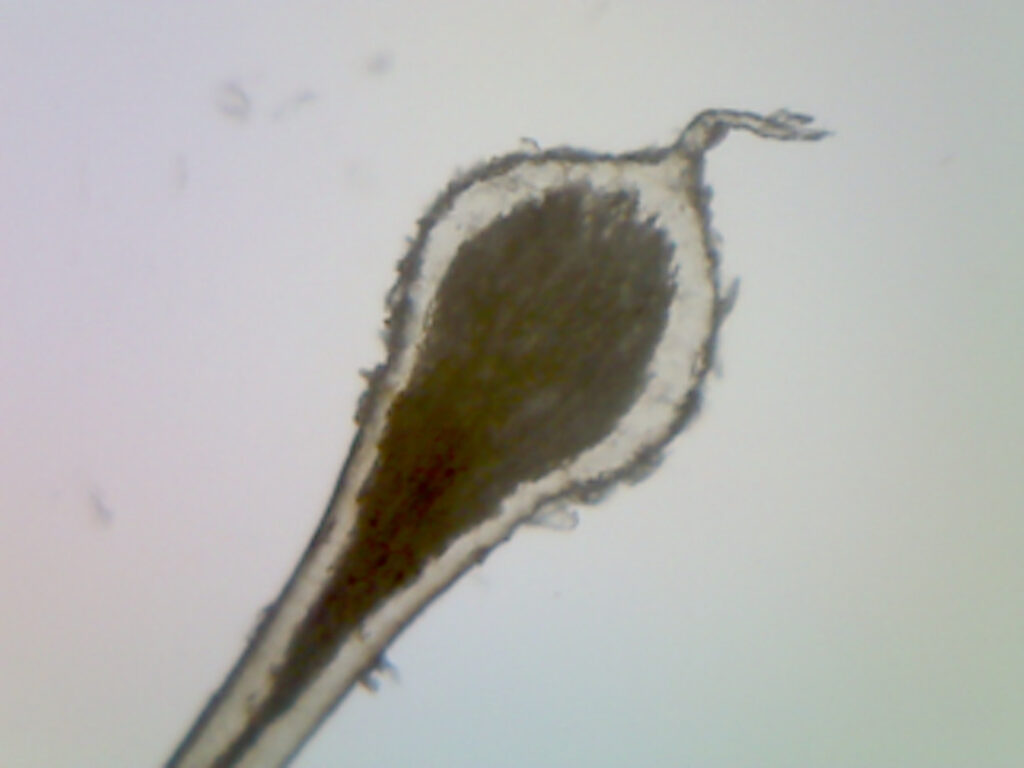
Shapely, well-nourished, clean, showing signs of regrowth: the root is perfect. Long-lasting hair is guaranteed!
What can affect the health of a root?
- External factors: micro-particles of pollution, residues from hair care products that are difficult to wash out with shampoo, stress, nutritional deficiencies, an unhealthy lifestyle, an unbalanced diet
- Internal factors: the sebaceous gland at the base of the follicle may produce too much or too little sebum, affecting the developing hair root. If the scalp is poorly supplied with blood (known as “vascularisation”), the follicles do not receive sufficient blood in terms of both quantity and quality, and the keratin produced will be of poor quality
- Genetic predisposition: in both women and men, DHT – the hormone responsible for hair loss – can disrupt the normal functioning of the hair follicle, causing it to produce hair with a disrupted life cycle. This is the phenomenon known asandrogenetic alopecia which leads to the hair gradually becoming thinner as it draws too quickly on our «hair capital»
Why it’s important to have strong roots
You can’t have beautiful hair without healthy roots
You can’t have healthy roots without active hair follicles
There can be no active hair follicles without an adequate supply of nutrients
There cannot be an adequate supply of nutrients without a well-supplied scalp
There can be no well-nourished scalp without effective microcirculation
What can you do to grow strong, healthy roots?
- Activate, promote and stimulate blood circulation in the scalp through effective massages
- Choose your hair care products carefully according to your scalp type: oily, dry, very dry, sensitive, with or without dandruff
Beautiful roots thanks to the right hair care
- Avoid overloading your scalp with unsuitable, overly rich or overly harsh hair care products, and rinse them out thoroughly
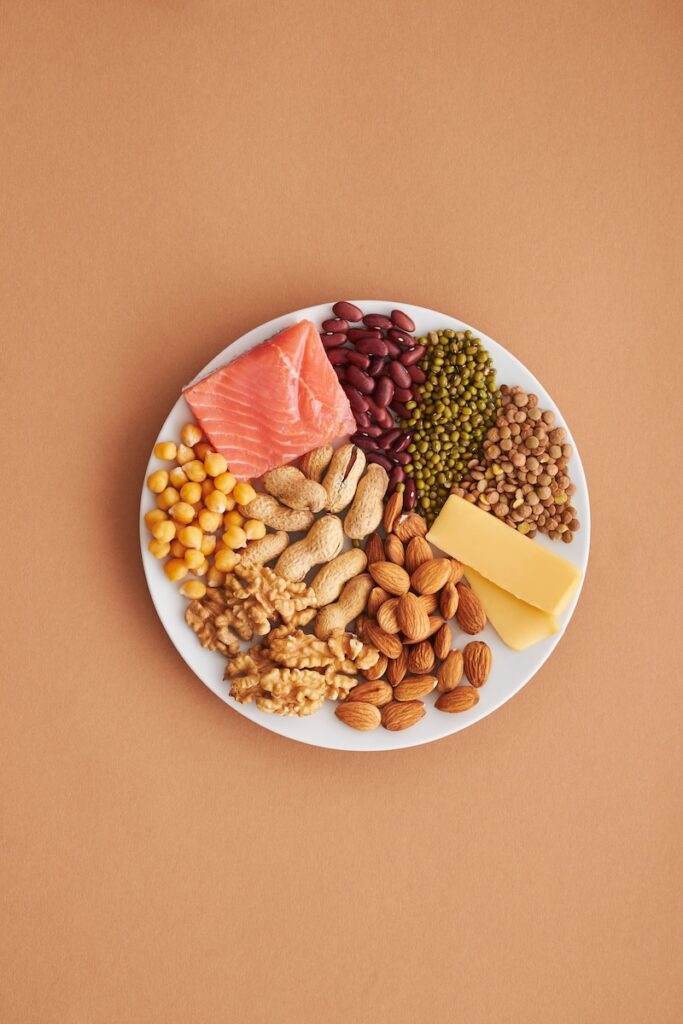
- Healthy roots in a healthy body! Hair is mainly composed of a protein called keratin, which needs to be looked after on a daily basis through a balanced, varied diet rich in protein (plant or animal) and trace elements, sulphur-containing amino acids, vitamins, … . In the event of a deficiency, one initial solution is to take dietary supplements specifically formulated to support hair health
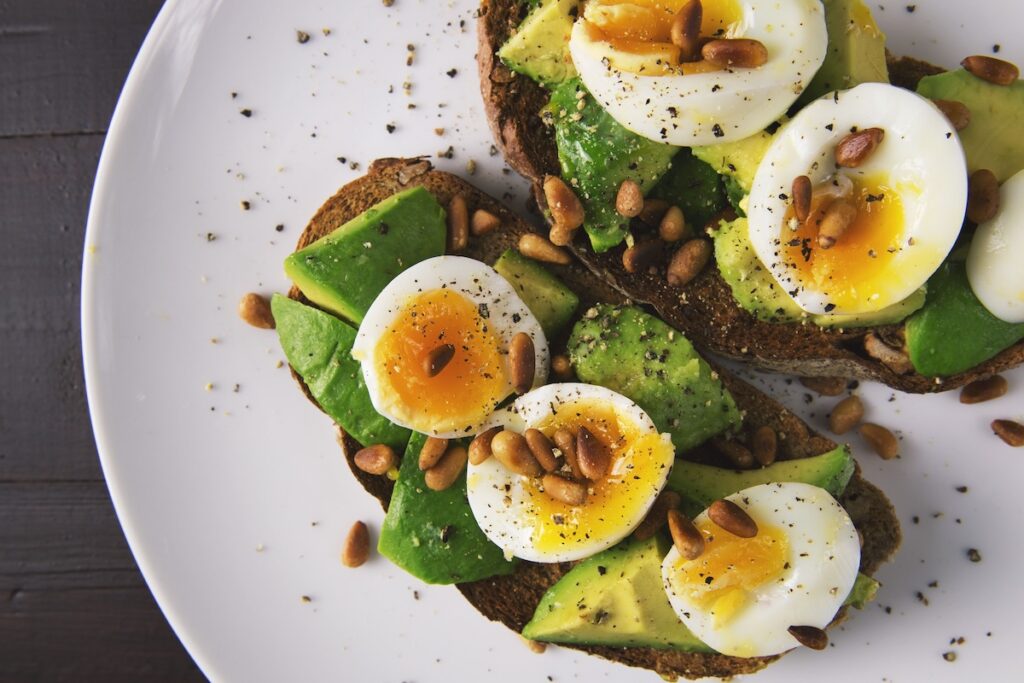
A high-protein diet
- Targeted topical treatments to boost cellular activity in the hair follicles: Clauderer anti-hair loss serums are designed to support the hair follicles so that they produce keratin and, consequently, the best possible quality hair root. Essential oils, vitamins and micronutrients: a concentrated blend of natural plant-based active ingredients to nourish the hair roots
Healthy hair from root to tip
The hair root lies at the heart of a fragile, vibrant and interdependent ecosystem. Without a well-nourished hair follicle, there can be no strong root. Without a healthy, supple and clean scalp, the root’s growth is slowed, so it is the longevity of the hair that is at stake. Even though we cannot see them, looking after them is essential for keeping our hair in top condition for a long time to come. After all, Hélène Clauderer was quite right: the roots of our hair really are the «roots of life».
Jean-François Cabos is the creator of a unique hair care method based on the research he coordinated, which led to the publication of the book Hair, Roots of Life with Hélène Clauderer published by Robert Laffont (Collection "Réponses/ Santé").

