
Our hair reflects our physical and emotional well-being. We’re keen to have thick, supple and shiny hair – a sure-fire way to keep our spirits high! The same goes for our scalp: clean, soothed and free from unsightly dandruff – a healthy scalp provides the ideal environment for strong, vigorous hair growth. And when our hair starts falling out more than usual, or a flare-up of seborrhoeic dermatitis is «ruining our lives», we look for answers to our hair concerns. A hair analysis is often the answer to our questions.
There are numerous hair analysis services available, and this term covers a wide variety of options. To find out what you can expect from a hair analysis, as well as what such an analysis cannot do, the Clauderer Centre explains this basic concept for you.
Hair analysis: a definition
If we want a quick definition of a hair analysis, we could say that it is an assessment of the condition of the hair (hair fibre, keratin) and, where applicable, the scalp.
Whilst the word «diagnosis» may bring to mind the medical world, perhaps even with a connotation of pathology, the full term «hair diagnosis» refers more to «study», »observation’ or ‘visual examination’, with or without the use of additional measuring equipment (trichoscope, microscope, etc.). This careful observation of the hair may be accompanied by an online or face-to-face consultation. It does not involve a thorough examination or analysis of the hair to determine concentrations of heavy metals, toxins or any illicit substances.
A hair analysis can therefore be carried out at a hairdressing professional or a hair expert, as these professionals are not doctors or dermatologists but possess in-depth knowledge of the hair thanks to their professional training and experience.
These experts will be able to examine your hair – whether it is curly or straight, natural or coloured – and identify any issues: breakage, open cuticles, porosity, thinning, or split ends. An examination of your scalp will reveal whether it is healthy, too dry or prone to oiliness.
When skincare routines or comprehensive cosmetic treatments are offered to address a specific issue, such as postnatal hair loss, androgenetic alopecia in women, hair breakage, scalp problems (itching, scalp irritation, dandruff,), we can then refer to hair care products. These are often topical treatments, meaning they are applied to the scalp and/or the hair. In some cases, dietary supplements (gummies, capsules) are also available as part of the range of treatments.
Hair and scalp problems: who should you turn to?
The areas of expertise of dermatologists, pharmacists and hair care specialists may overlap when it comes to certain everyday issues: there are, in fact, several different approaches to treating alopecia, soothing an irritated scalp, ensuring the strength of hair grafts following surgery, or repairing damaged hair.
Depending on your specific concerns and preferences, you should consult a different professional to carry out your hair analysis, as each has their own areas of expertise:
Hairdressing salon
An expert hairdresser will be able to offer advice before carrying out a chemical or natural hair colour treatment. This will also be the case before carrying out cosmetic treatments such as straightening, relaxing or highlighting, as these procedures have a significant impact on the hair fibre. They will be able to offer advice on the techniques, treatments or products best suited to your needs. In fact, it is the quality of their advice that will help you recognise a true professional. Rather than simply agreeing to all your requests, they will warn you about certain treatments or products that are unsuitable for your hair and could damage it. For example, a hairdresser worthy of the name will never advise you to have highlights done too soon after a relaxer or straightening treatment. An expert hairdresser will take the time to listen to you before carrying out a cut, treatment, technique or colour.
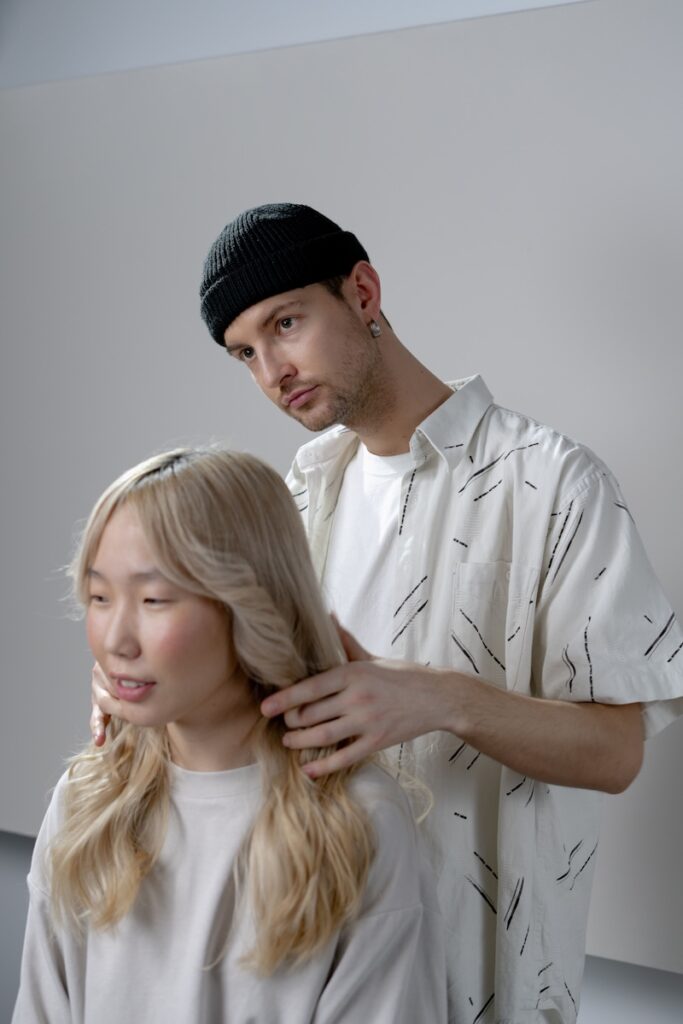
The right cut, the right colour? I trust my hairdresser
The hairdresser is the right choice for you if you’re looking for: advice and services on haircuts, hair care, colouring, grey hair, straightening and other cosmetic treatments.
Hair care institute or centre
At a hair care specialist such as the Clauderer Centre, the focus is on the health and beauty of the hair and scalp. This involves a careful examination of the scalp, as well as the precise measurement of keratin using a microscope, following the collection of several hair strands from different areas of the scalp. The Clauderer in-depth diagnosis includes a questionnaire on hair care routines, lifestyle and health. It is a holistic approach that takes into account the scalp health, this is the foundation for optimal, healthy hair growth.
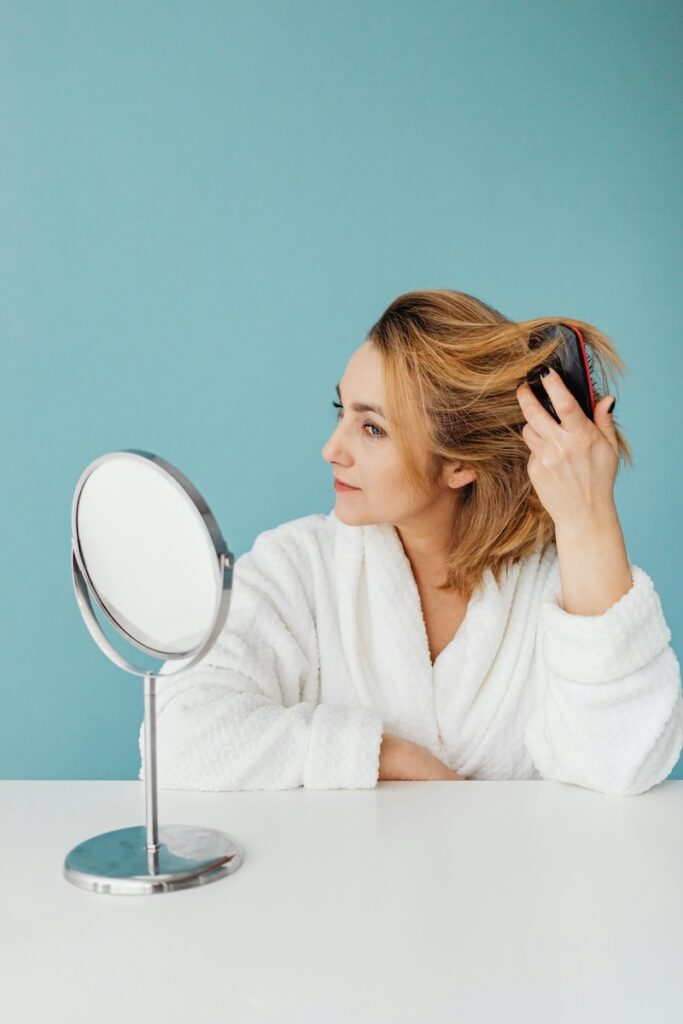
Thinning hair, early baldness, postnatal hair loss… your hair care expert has the solutions

A Cosmetic Expert is here to help you with: thinning hair, hair loss, alopecia, early baldness, dandruff, problem scalps, brittle hair, and pre- or post-hair transplant care. Cosmetic, non-invasive solutions, whether or not based on natural products. Textured Afro hair, senior citizens' hair, women, men… everyone is welcome.
Medical or paramedical professions
The term “healthcare professional” refers to: a pharmacist, a dermatologist, a general practitioner or a cosmetic surgeon, and a nurse.
Only a healthcare professional will be able to identify a fungal skin condition and accurately distinguish between dermatitis, psoriasis or lichen planus of the scalp. A doctor or dermatologist may also carry out blood tests and/or scalp biopsies if necessary. It’s a completely different world. This medical field also encompasses hair transplants and implants, as well as cosmetic medicine.
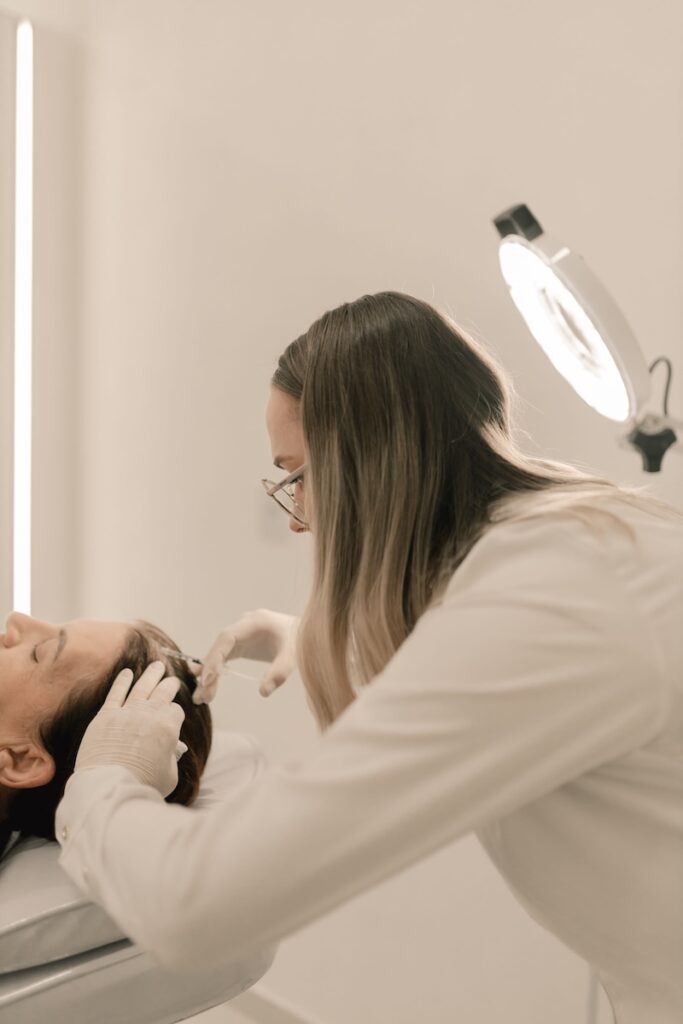
Injections or transplants: it’s up to the healthcare professionals
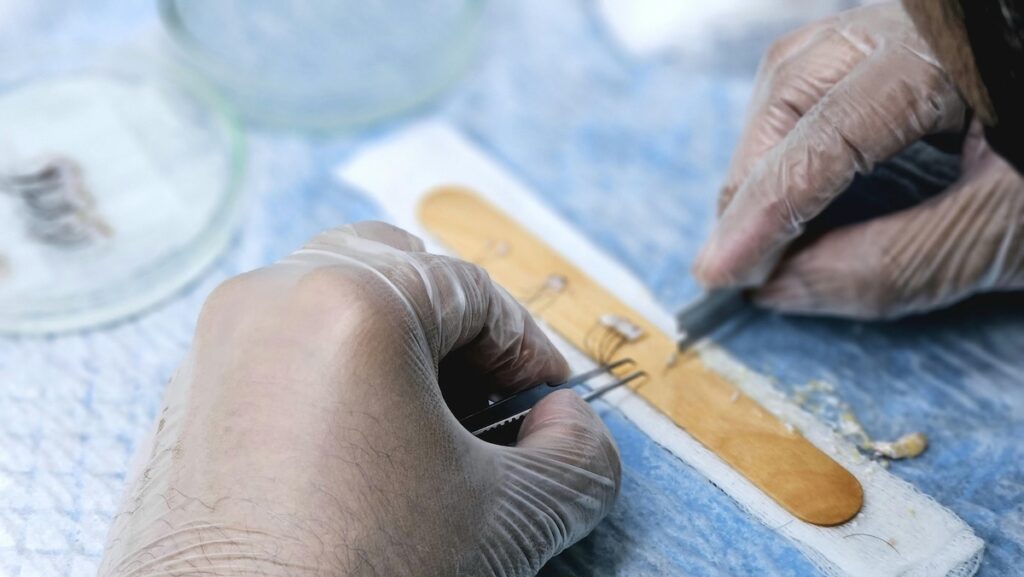
This is the answer to your hair or scalp problems if you are looking for conventional medical solutions (medication-based treatments), including PRP-type treatments, to treat scalp conditions, alopecia, and male or female pattern baldness.
What does a hair analysis involve?
Here we are referring solely to diagnoses for cosmetic purposes. Indeed, if you are considering hair restoration surgery or suspect alopecia areata or lichen planus, for example, it is clear that a consultation with a healthcare professional is essential.
It’s often possible to carry out a quick online self-assessment by answering a few basic questions (main concern, hair type, etc.). For those in a hurry, this may be enough, as there’s often a standardised solution to a simple problem. Once you’ve completed the short questionnaire, you’ll receive an order proposal; you can confirm it if you wish and receive your products along with instructions for use. Then it’s up to you!
However, if you’d like to find out more about your hair or scalp problems, or if you’re concerned about hair loss, an in-person appointment with a hair care expert or a healthcare professional can provide you with personalised advice.

Hair analysis: I book an appointment, I understand, I treat
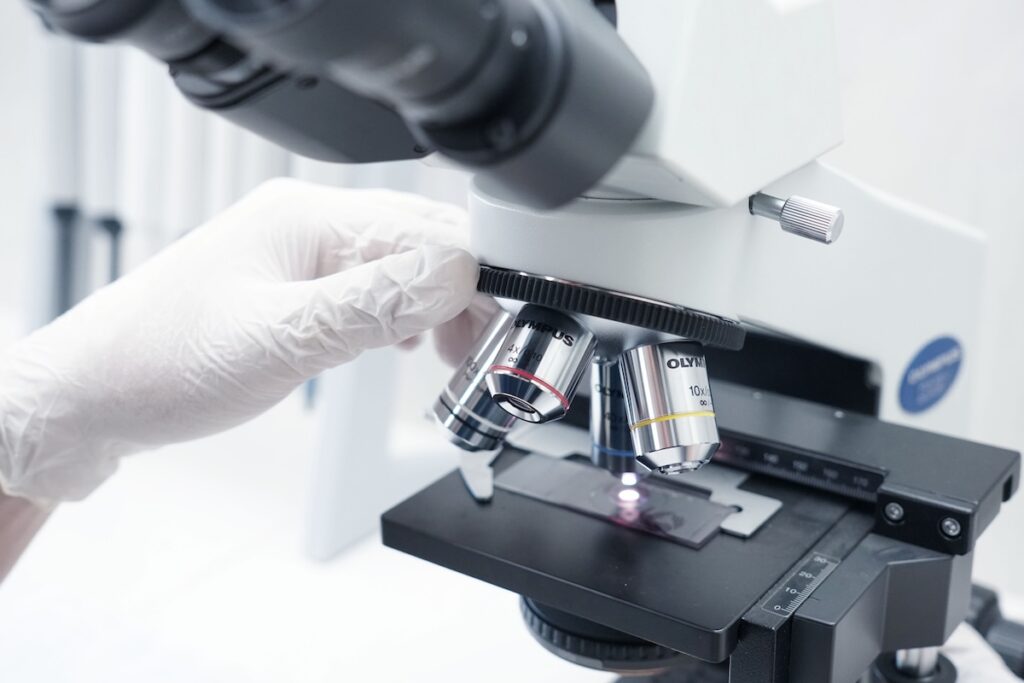
Generally, the appointment consists of three stages:
- Phase 1: listening, observation, measurement
- Phase 2: Assessment, explanations
- Phase 3: advice, recommendations, solutions
As well as a professional’s expertise and objective advice, you’ll usually have a little time to ask questions, receive personalised advice and, above all, understand what’s happening to you. Putting your hair concerns into words and understanding the causes – both primary and secondary – of your hair loss, for example, enables you to take control of the situation and avoid despair. Because once a hair diagnosis has been made, you know that solutions do exist. Soothing scalp irritation, getting rid of dandruff caused by flare-ups of dermatitis or psoriasis, stimulating the growth of stronger hair, repairing damaged hair fibres, and so on…all you need to do is (re)discover the right routine with the right products and expert advice. Of course, hair care products don’t solve every problem. Nevertheless, natural hair care offers a sustainable approach that prioritises gentle, respectful care for the hair and provides effective alternatives to certain medicinal treatments, particularly when it comes to the natural treatment of hair loss.
Having beautiful hair and looking after it to preserve its natural beauty helps you feel good about yourself. A hair analysis will enable you to make an informed choice about which professional to entrust with your scalp and hair: don’t overlook this appointment.

A hair analysis for everyone!
At Clauderer, we offer solutions that have been proven effective for many years in treating scalp problems and hair loss in both women and men. Come and see us and discover our natural beauty products!
Jean-François Cabos is the creator of a unique hair care method based on the research he coordinated, which led to the publication of the book Hair, Roots of Life with Hélène Clauderer published by Robert Laffont (Collection "Réponses/ Santé").

