5 key questions about the effectiveness of scalp massages
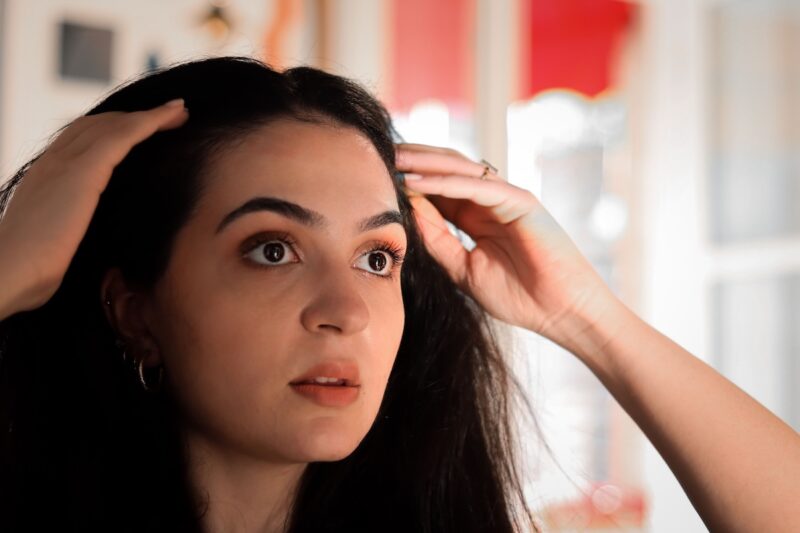
Scalp massage is a widespread traditional practice, particularly in Asia: whether self-administered or carried out by someone else, scalp massage is reputed to be very beneficial. But is this really the case? Beyond the sense of well-being, do scalp massages offer any real added value to our hair care routine?
We hear all sorts of things – and their opposites – about scalp massages and the benefits – real or supposed – they offer. To help you, here are expert answers from our specialists to help you understand the benefits and limitations of scalp massage.
Why massage your scalp?
The scalp is an area where the epidermis is particularly rich in blood vessels – which is why it is easily sensitive and reactive to external factors. Heat from the sun or a hairdryer, and unsuitable or overly harsh hair care products, are the enemies of a healthy scalp. Internal factors such as stress, an autoimmune condition (dermatitis or psoriasis) or simply a genetic predisposition (a scalp that tends to be oily or excessively dry) can also disrupt the delicate balance of its specific microbiome . As a result, tensions are mounting and natural irrigation is being compromised.
Imagine a river whose flow depends on its environment: debris that builds up, pollution, too much or too little rain. It’s the same with the scalp’s blood supply.
If there is a blockage or a slowdown in blood flow, the scalp suffers and the hair follicles receive less blood and are less well nourished. This may result in them producing hair with an irregular growth cycle.
To ensure the scalp – and therefore the hair follicles – are properly supplied with blood, a massage is highly recommended to soften the skin and, so to speak, improve circulation. A healthy scalp feels supple to the touch, and blood flows freely.
A healthy scalp is one that is well supplied with blood and oxygen; the blood vessels are responsible for delivering the nutrients essential for healthy hair growth to the hair follicle, the matrix that produces the hair.
Does massaging cause hair loss: true or false?
True and false.
That’s true because the manipulation and movements applied to the scalp have a mechanical pulling effect on the hair. Hair in the dormant or telogen phase is hair that has reached the final stage of its life cycle. Having already become detached from their follicles, they gradually rise to the surface of the scalp and eventually fall out: massaging, brushing, shampooing, styling, etc., are all actions that can hasten their loss. This is not a problem, as they were already destined to fall out. Nor is it a cause for concern, provided they are replaced by identical hairs.
Take care with recent hair transplants: avoid massaging or rubbing the area in the weeks following the procedure. Whilst it is normal for a few grafts to fall out, there is no need to make the situation worse.
That’s not true because massage does not cause increased and/or unusual hair loss unless it is carried out incorrectly! In the event of abnormal hair loss, the causes lie elsewhere: stress, seasonal hair loss, heredity, ...
Manual or mechanical massage – which is more effective?
At Clauderer, we often treat clients with sensitive, fragile and irritated scalps. Consequently, we prefer to avoid the micro-needling technique, as the rollers with their tiny metal pins can cause micro-lesions that are harmful to the scalp. When carried out correctly, manual massage is highly effective, but soft massage brushes – whether manual or electric – can also be used. The idea is to apply enough pressure to relax and stretch the scalp. When you are feeling very stressed or tense, a small massage brush can help to soften the skin more quickly and provide immediate relief – as well as improved blood circulation.
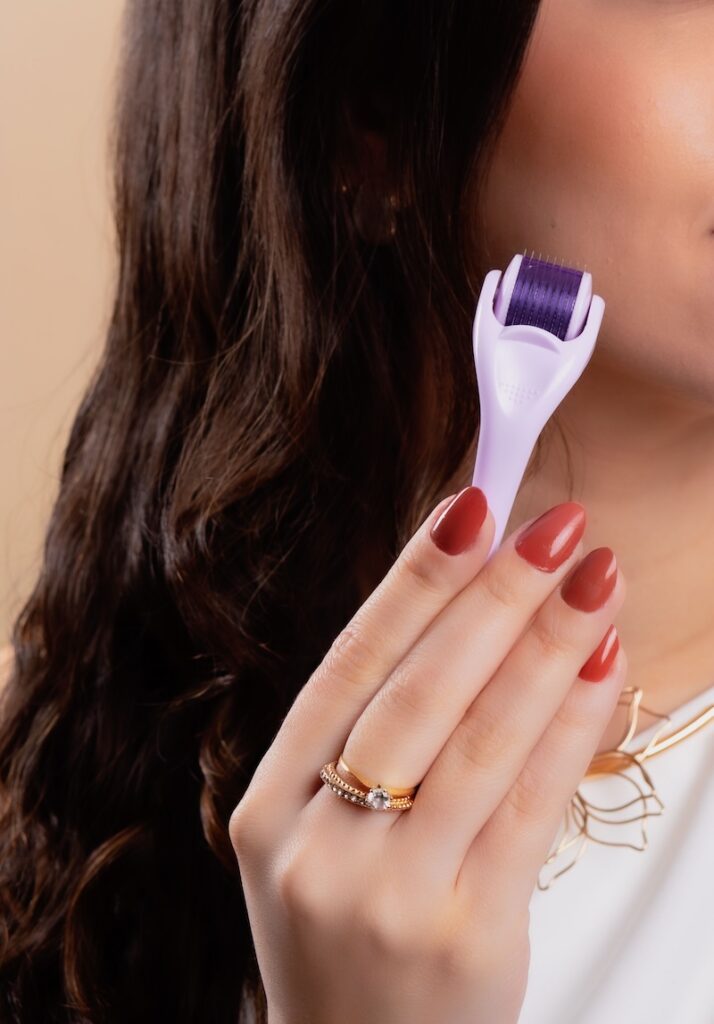
Micro-needling tools can damage the delicate skin on the scalp. A manual massage is just as effective and completely safe!
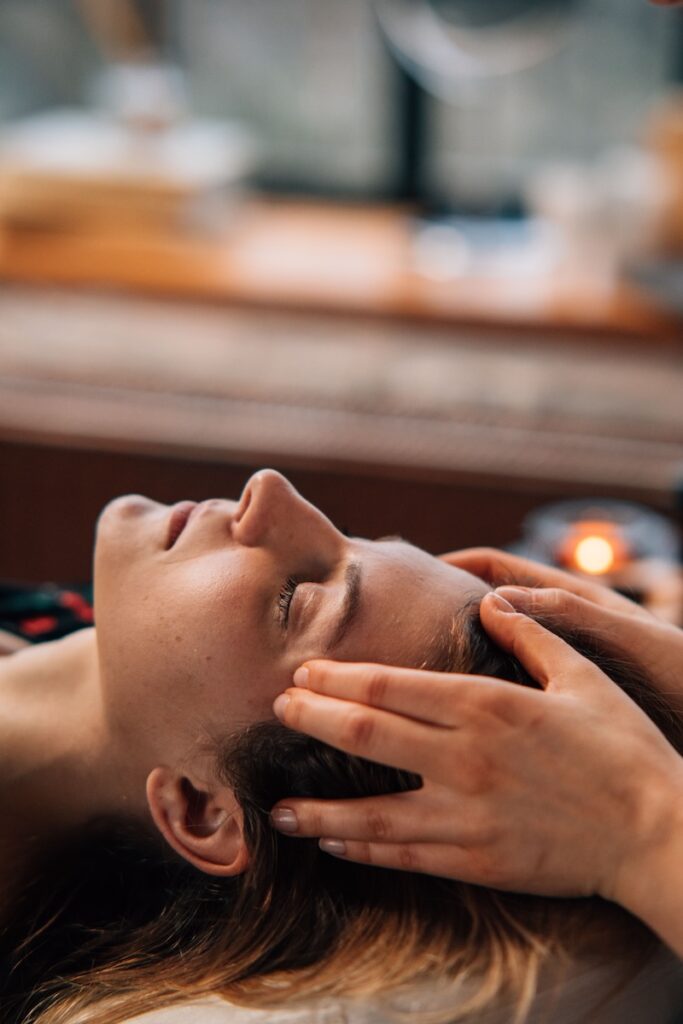
How can you make a scalp massage more effective?
Depending on your scalp type, you can space out your massages, carry them out «dry» or use a lotion, the active ingredients of which will penetrate more effectively into the subcutaneous layer. On a scalp prone to excessive sebum production, massaging too frequently accelerates sebum production and leaves the scalp even oilier. On a dry, dehydrated scalp, massaging can be painful.
Clauderer Advice : Perform your massages using a Clauderer Milk whose plant-based active ingredients are carefully selected to gently rebalance the scalp’s pH. The massage helps the active ingredients to penetrate more effectively, and leaving it on for a while makes it even more effective!
A softening scalp lotion containing sweet almond oil moisturises and soothes an excessively dry scalp. For a scalp prone to oiliness, opt for sage and camphor (which have naturally purifying, sebum-regulating and antiseptic properties). Massage into dry scalp for 1 minute, then apply your mild lotion, leave it on for about twenty minutes, massage again, rinse and wash your hair with shampoo. This is the ideal massage routine for keeping your scalp in top condition, healthy and comfortable. As an added bonus, dandruff and any other flaky skin are removed more easily.
Does a scalp massage make your hair grow?
By helping nutrients reach the hair follicles, you’re giving yourself a better chance of success, but it cannot be said that massage is a hair-regrowth treatment in its own right. It is an additional aid, but massage on its own does not prevent hair loss. On areas that are already hairless – with no hair at all – there is no point in expecting massage to reactivate the hair follicles.
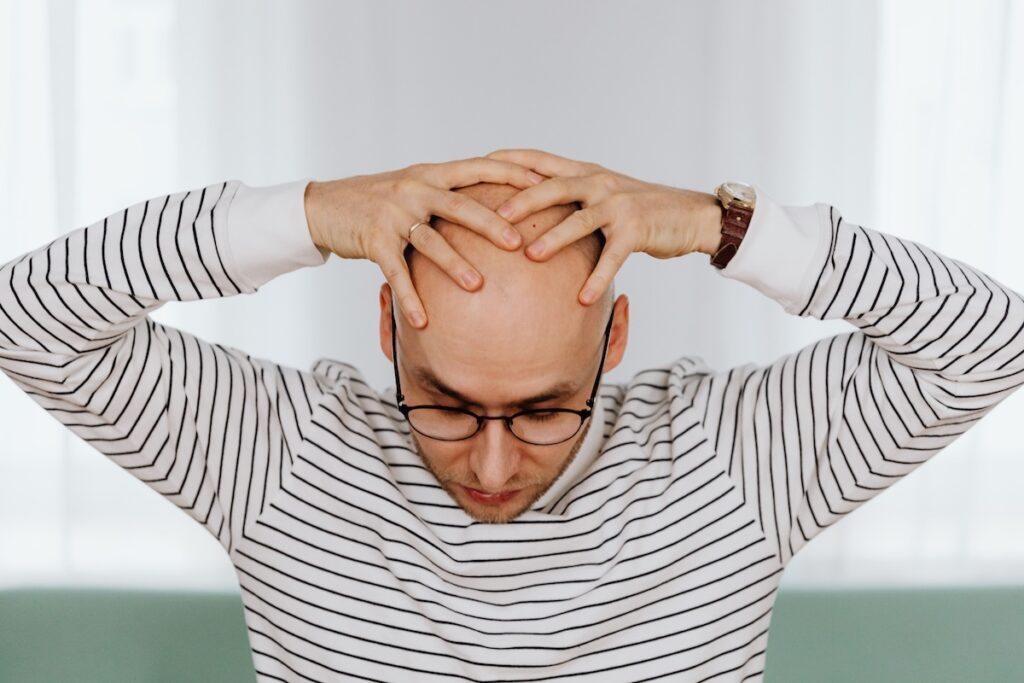
There’s no miracle cure for established baldness!
However, recent studies have looked at massage and its effect on hair thickness and growth. As these studies are very limited in scope, they should be treated with caution.
One (1) is based on a small sample of adult men and suggests that regular, prolonged mechanical massage over a period of 6 months appears to increase the thickness of the hair shaft (averaging between 85 µm and 92 µm). However, the same study reports a significant drop in the number of hairs halfway through the trial! No effect was observed on hair growth, growth rate or new growth. The scientific assessment techniques are complex and suggest a genuine benefit in terms of thickness, as massages affect the functioning of the dermal papilla, which is responsible for the life cycle of the hair beneath the skin. Furthermore, changes have been observed in some of the genes responsible for the hair’s life cycle as a result of the massages.
Another study (2), carried out on several hundred participants suffering from androgenetic alopecia, supports the view of a positive perceived effect following manual massages. This involves a combination of circular massages followed by pinching techniques. Over a long period – more than six months, with extended massages lasting 10 to 20 minutes a day – three-quarters of participants reported that their hair loss had stabilised or that their hair had even started to grow back. Please note that these are self-reports.

Incorporating scalp massages into your hair care routine can help to promote healthy hair. Do give it a go!
Scalp massages promote oxygenation and the transport of nutrients to the hair follicles. When carried out regularly, these massages support the vitality of the hair follicles. When stimulated, the follicles produce well-nourished hair, ensuring optimal longevity. The results of the studies cited above appear to validate a centuries-old empirical observation: scalp massages are beneficial, and not just for their relaxing effect. Scalp massage is, in fact, an integral part of the hair care protocol developed at Clauderer. In the future, science may be able to explain why, and even propose new, even more effective massage techniques which might, who knows, stimulate new hair growth, halt hair loss and increase hair density. But that’s for the future!
- Japan Study, 2016: https://pmc.ncbi.nlm.nih.gov/articles/PMC4740347
- US Study, 2022: https://pmc.ncbi.nlm.nih.gov/articles/PMC6380978
Jean-François Cabos is the creator of a unique hair care method based on the research he coordinated, which led to the publication of the book Hair, Roots of Life with Hélène Clauderer published by Robert Laffont (Collection "Réponses/ Santé").
