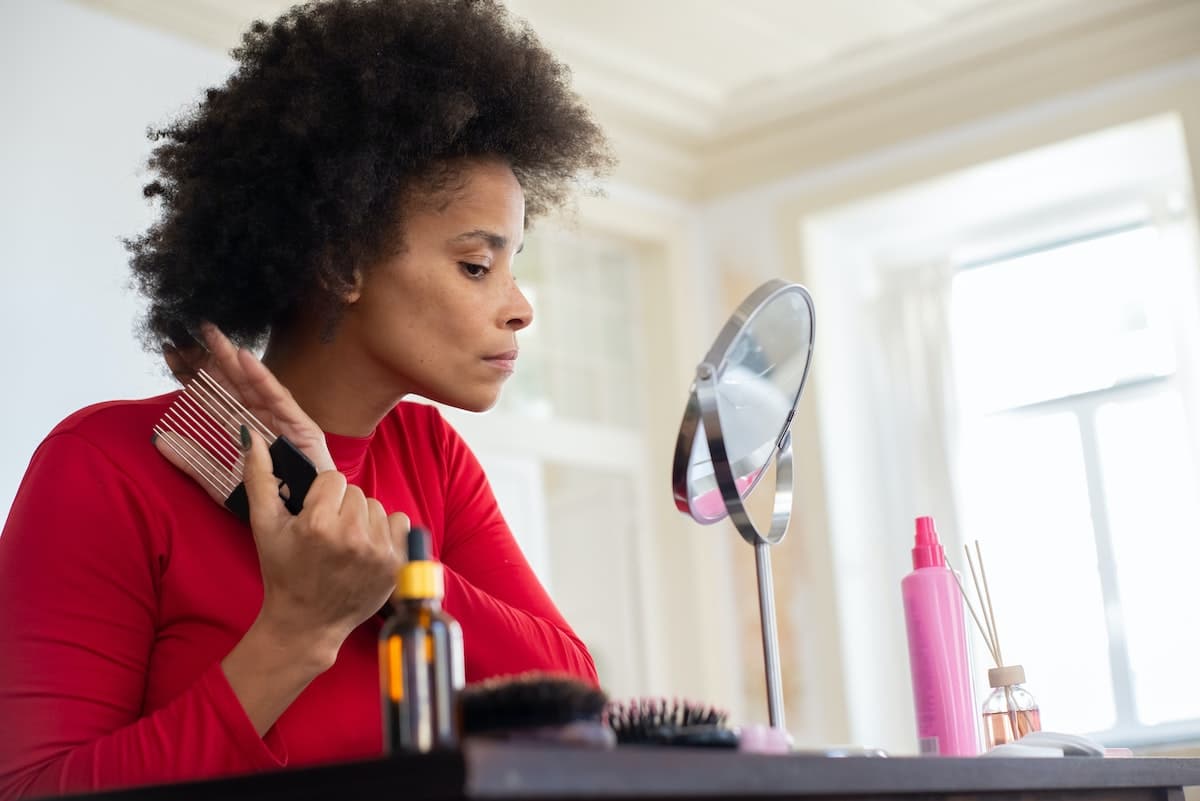
How to grow frizzy hair is a preoccupation for many of us, and we're constantly on the lookout for advice and tips on how to find the right shampoo, treatment or vitamin complex to help our hair grow faster.
First of all, you have to get over the all-too-common misconception that "Afro hair doesn't grow". During the hair diagnosis at the Centre Clauderer, we regularly hear this complaint: "my hair doesn't grow at all, it doesn't grow fast enough, it grows badly, give me some advice to help me grow my frizzy hair".
Secondly, it's important to realise that there's no such thing as a miracle cure for hair regrowth (frizzy or otherwise). For a start, you shouldn't expect a topical product such as an oil, shampoo or any other product applied to the lengths to promote hair growth or slow down hair loss. To stimulate hair growth, any growth-activating product (Clauderer Serums) must be applied to the scalp so that its active ingredients penetrate the epidermis and target the hair follicle. By understanding the characteristics of your Afro or mixed-race hair, by avoiding harmful manipulations, by spacing out certain hairstyles that are traumatic for the scalp and hair bulbs, and by adopting a simple, gentle routine using natural products with recognised benefits, you will have in your hands the solutions for perfectly healthy hair for a long time to come.
Characteristics of afro, frizzy or mixed-race hair
Let's start by understanding what distinguishes Afro hair from Caucasian hair.
Their "corkscew" shape does not allow the hair to emerge from the hair follicle as easily as straight European hair. Afro, curly or even very curly hair will grow by pressing against the scalp. Its particular tendril shape allows it to cover the scalp and was originally designed to protect the entire scalp from the sun's harsh rays. The more the hair is twisted, the shorter it looks, as if it wasn't growing, because it's gathered in on itself.
The average growth rate of afro hair is 0.8 cm per month. This is effectively a pace of growth slower than Caucasian or Asian hair. The fact that hair grows more slowly gives the impression that it is not growing. However, if we stretch the hair, we can easily see its real length once it is flattened out.
What's more, by its very nature, frizzy hair tends to shrink with humidity and can lose up to 70 % of its length. Another optical illusion!
Afro hair is also naturally drier and finer than other hair types. More fragile, it breakage. especially as we tend to subject it to multiple manipulations: straightening, straightening, not forgetting various hairstyles (braids, plaits, additions, etc.) sometimes from a very young age and too frequently, without providing the care suited to its nature. As a result, hair can feel stagnant. Don't confuse breakage with a lack of growth!
Now, the large family of afro hair is not homogeneous
La diversity of afro hair is limitless and simplified typologies that exist only give general indications. However, it is essential to know your hair well and ask yourself the right questions about hair growth and regrowth.
Get to know your hair well before starting any treatments to encourage hair growth:
- Are the curls more or less defined? tight, curly, very curly, twisted, etc.? The tighter the curls (frizzy, afro), the drier and more fragile the hair.
- Porosity. Most hair is porous, which means that it absorbs water and moisture more easily and quickly, but is unable to retain it, resulting in dryness and dehydration.
- What environment does hair grow in? The climate can also be harmful, because in temperate zones (Europe) where the air is cold and dry, the pores of the scalp tighten, preventing the secretion of sebum.
- Is your hair more prone to breakage because it has become even drier? If so, what should you do?
So why doesn't afro hair grow as fast as you'd like?
Once you've understood that, yes, your Afro hair does grow, the fact remains that you may want to stimulate its growth and do everything you can to give it the care it deserves.
Afro hair that doesn't grow properly is often the result of a combination of factors:
- Hair care that is non-existent or too irregular
- Unsuitable cosmetic procedures
- Harmful, chemical, drying hair products, an inadequate hair routine (shampooing too often, shampoo not adapted to their nature, not enough moisturising, vegetable oil badly chosen or badly used).
- Braids, weaves, additions and other extensions that weigh hair down and weaken it
- High sources of heat (hairdryers, straightening irons)
- Intense brushing that damages keratin (choose the right comb, the right action)
- Too frequent straightening, smoothing or chemical softening
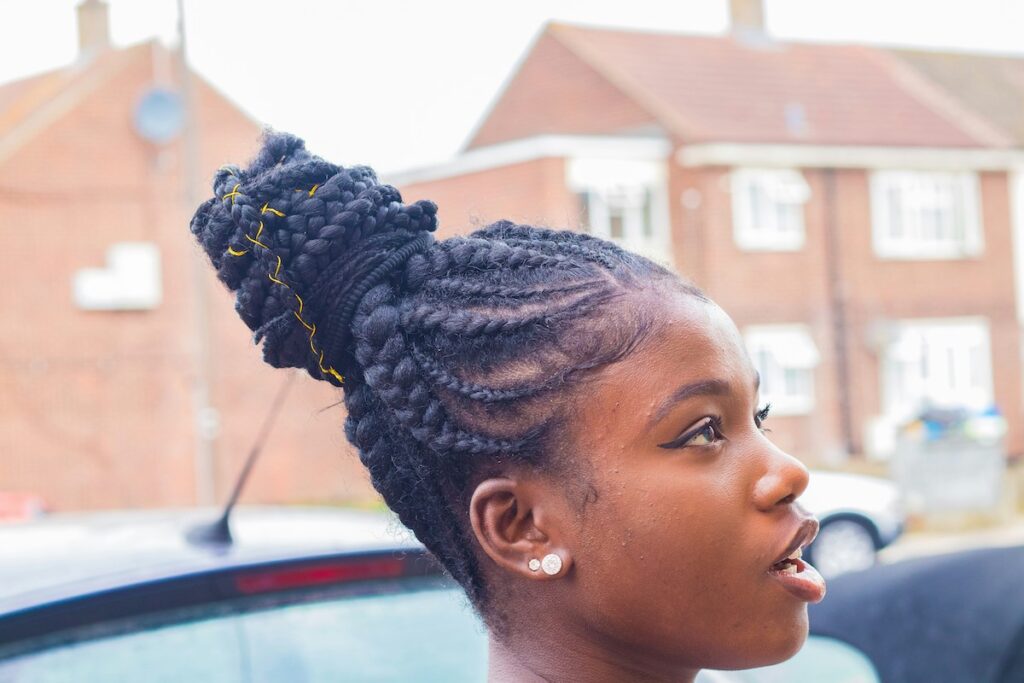
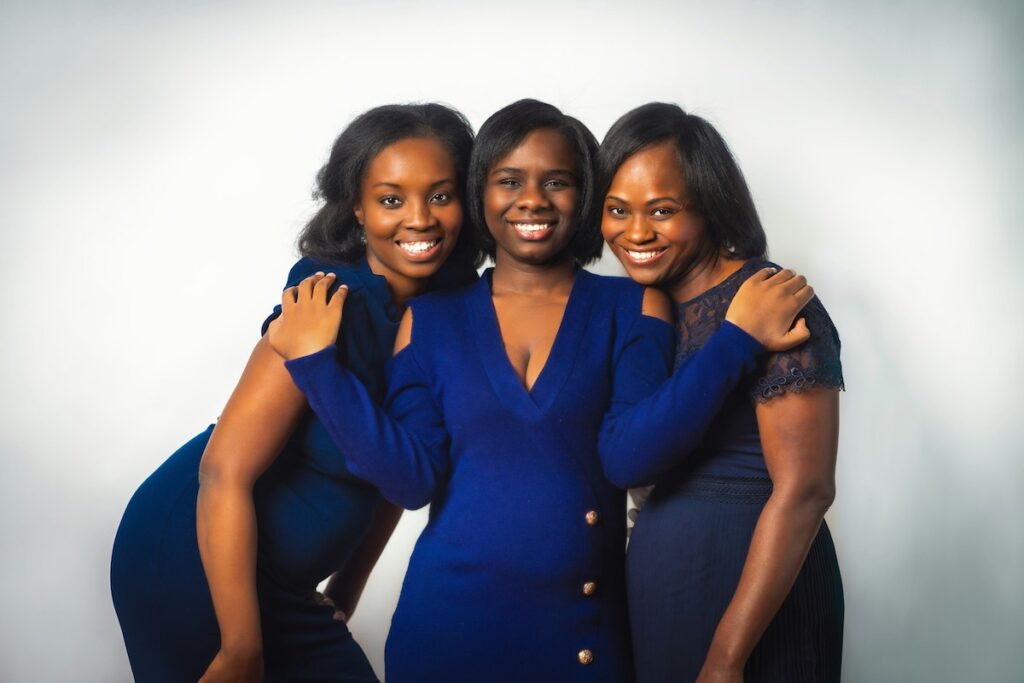
Overly aggressive hair care, repeated styling, adding on or straightening can cause long-term damage to frizzy hair and slow down its growth.
As a result, how to grow frizzy hair often comes down to "how to avoid damaging my frizzy hair"!
Advice on how to improve growth and prevent breakage of frizzy and mixed-race hair:
Above all, hair reacts to the way we handle it and the care we use. We need to treat our hair as we treat our skin, with care and gentleness. Our hair, like our skin, needs nutrients, hydration and protection. We all have a skincare ritual, and the same should apply to our hair. You can give your hair as much care as you give your skin! Serums, masks, creams, oils, milks etc...
Hair grows from the hair follicle. It is supplied with nutrients by the blood. To begin with, it is therefore essential to give priority to a a healthy lifestyle:

Healthy hair in a healthy body

Fill up on vitamins!
- Where appropriate, provide food supplements specially designed to answer hair issues. the nutrients and trace elements they need, focusing on the 7 active ingredients : Methionine, Cysteine, Cystine, Zinc, Iron, Silicon, Magnesium, cf. Racines Plus cure.
- Filling up on B vitamins contributes to good physical health and beautiful hair. For vegetarians, think vitamin B12.
- Eat a balanced diet rich in protein.
- Check whether the ferritin (iron reserve) is within norms, ideally between 60 and 80 ng, and the vitamin D as well. These two elements are very important for healthy hair.
- Drink water! Hydration starts at the roots.
- For good metabolic balance in general, make sure the thyroid gland (TSH) is working properly. The thyroid is our body's "thermostat" and any variation can lead to an imbalance in our body (hair loss, thinning, breakage, excess sebum, weight gain or loss, or mood changes).
- Be physically active to counteract the negative effect of stress.
- You should also choose foods rich in vitamin C, as this vitamin fortifies the hair. Foods rich in protein nourish the production of keratin and give your hair a real boost!
As we have seen, Afro hair is particularly susceptible to breakage because of its tendency to dehydrate. Using moisturising and nourishing care (hair protection and restructuring) is therefore the second part of an effective hair routine:
- Our advice: hydration (spray spring water with castor, jojoba, avocado or olive oil). This makes the hair more supple, softer and easier to handle. This is the basis for normal hair growth. Moisturising can be done several times a day if necessary, or simply with spring water and no added oil.
- Adopt a hair routine with the right products (nourishing and repairing masks) for your hair type. Our advice: Clauderer Baume No. 56 and Clauderer Baume N°57.
- Use plant oils and essential oils to seal in moisture and strengthen hair (e.g. in spring water).
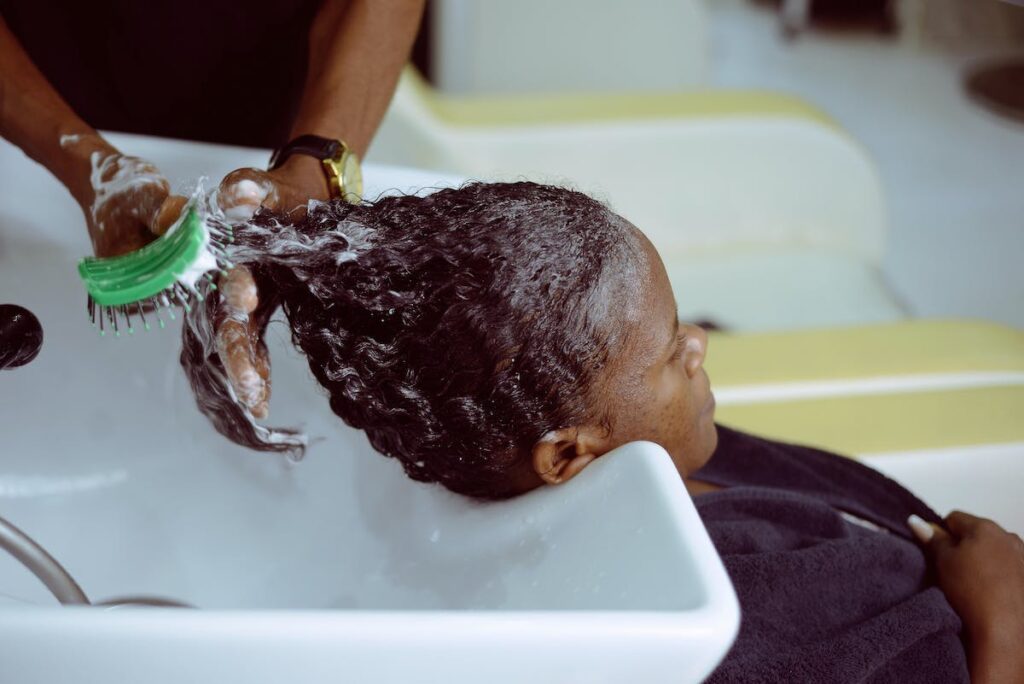
- Spacing out shampoos helps to maintain a lipid film on the fibre. Choose non foaming cleansing creams so as not to dry hair out even more (our advice: Clauderer Cream N°25 or Clauderer Cream N°26R ).
- A little tip: Protect your hair at night with a silk or satin scarf to avoid rubbing, as cotton pillows absorb all the moisture that afro or frizzy hair needs.
- Also remember to use vitamin A-based skincare products, the vitamin that improves cell renewal (Clauderer Serum N°6R, N°7R ) and vitamin E, a powerful antioxidant (e.g. Clauderer Cream N°26R, Clauderer Balms N°56 and N°57, Clauderer Emulsion N°19 and of course Clauderer Serums N°6R and N°7R.
- Don't neglect the tips either, as this is the oldest part of your hair. We recommend applying a small amount of plant oils or butters (see Clauderer Nutritive Balm N°57). And don't hesitate to cut them from time to time: it's better to have healthy hair that's a little shorter than long, split and brittle hair.
Third: pay close attention to styling techniques and tools. Once again, afro hair is extremely fragile and needs to be handled with care. Visit the right gestures and the right tools, from shampoo to beauty treatment.
- Avoid as much as possible straightening iron and hairdryer.
Beware of frequent use of the straightening iron, as it causes the hair's protective layer to disappear. The hair then becomes thinner and ends up breaking. Never use a straightening iron on damp or wet hair. - Gently detangle wet hair in sections. Use afro combs or your fingers (especially if the hair is fine and fragile). Always start at the ends and work your way up towards the roots.
- Use fabric elastics rather than plastic to avoid breakage.
- Do not rub your hair when shampoo to avoid tangles. And why not do your own shampooing: try our homemade recipes.
- Don't forget the final rinse with a jet of cold water to close the cuticle scales.
- Thanks to massages cleanse and deep-cleanse the scalp to free the pores of any impurities that could hinder the oxygenation of the roots and therefore vigorous regrowth. A Clauderer Cleansing Milk is perfectly suited to moisturising the scalp, leaving it supple and comfortable. A good massage also encourages microcirculation in the scalp.
- Choose plant-based dyes as an alternative to chemical dyes.
- Remember to protect your hair when out in the sun with a hat, scarf or turban.
- Oxygenate the hair (as far as possible, forget wigs, tight plaits, caps, weaves, extensions, etc.). Leave hair out in the open as much as possible.
- Finally, opt for afro hairstyle which is undoubtedly the hairstyle that will best preserve your hair. Provided, of course, that you look after it from root to tip and remember to moisturise regularly. Going back to a natural hairstyle is the best way to preserve your hair, and it's a wonderful adventure you're about to embark on.
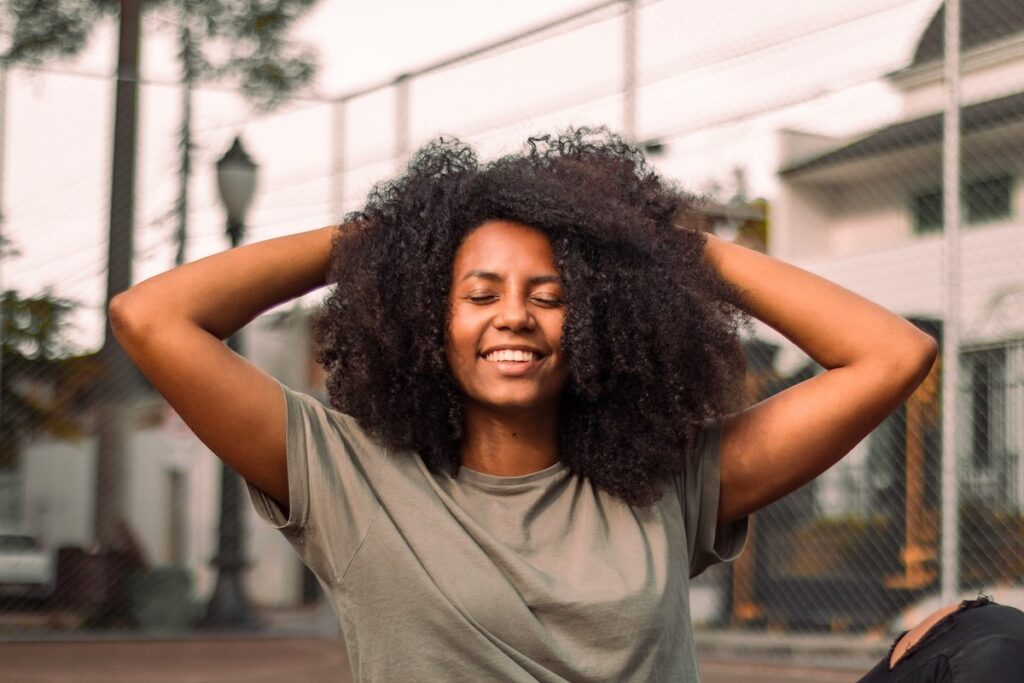
Beautiful hair, naturally
To conclude, a good hair routine with products specifically adapted to your hair type (ideally natural products), a basic treatment to stimulate regrowth and a little patience are the key to hair in great shape. Results are achieved over the long term because hair needs time to recharge its batteries. Hair of any kind needs constant hydration and nourishment, just like our skin. Regular, healthy habits are the key to healthy hair. Forget the old habits of trying a multitude of products that end up in the back of the cupboard because they're unsuitable. It's better to few products, but the right ones! It's not the quantity but the quality of the products and the way they are applied that makes all the difference. The routine must be simple and effective.
In short, for healthy regrowth of Afro hair, Clauderer recommends simple and effective steps: an oil or blend of oils, a shampoo (or preferably a non-foaming cream), a conditioner, a mask and styling cream and, of course, water (to moisturise). Above all, taking pleasure in maintaining your hair is the key to success.
Jean-François Cabos is the creator of a unique hair care method based on the research he coordinated, which led to the publication of the book Hair, Roots of Life with Hélène Clauderer published by Robert Laffont (Collection "Réponses/ Santé").
