Help, there's alcohol in my shampoo!
Alcohol in my hair care products? Attentive - with good reason - to the quality and composition of the hair care products we apply to our scalp and hair, we can be disorientated when we read 'alcohol' on the label of our favourite shampoo. At a time when we're looking for gentle, soothing formulas, it can be surprising to find that they contain alcohol, a substance that might seem problematic, especially for people with sensitive scalps and fragile lengths. This is even more true when it comes to the composition of a natural or organic haircare product.
Let's take a look at the different types of alcohol that can be found in hair care products. Why are they useful and, more importantly, what properties do they impart to our hair lotions, creams and shampoos?
What type of alcohol can be found in natural hair care products?
Ethyl alcohol: pros and cons of hair care products
Of course, for everyone, alcohol is a drink made by fermenting or distilling plants, fruits or seeds. This is known as ethyl alcohol or ethanol. It is also often referred to as "denatured alcohol", which simply means that the alcohol has been rendered unfit for consumption.
Ethanol can be used in certain cosmetic products because it has a number of particularly interesting properties:
- Immediate cooling effect, but also volatile, meaning that the cooling effect lasts only a few moments.
- Purifying and antiseptic action, bactericide, used as a preservative.
- It destroys fats and can therefore be used as a solvent
- It can also be used to prepare plant extracts for perfumes or skin or hair care products.
On the other hand, it has the defects of its qualities:
- It is above all its ability to strip the scalp and hair fibre of its protective hydrolipidic film - in other words, sebum - which makes it an enemy of our hair, drying it out and weakening it. However, this is only true if it is present in high concentrations (in which case it will be at the top of the list on the label).
- Although it is not strictly speaking considered an 'irritant' ingredient, you can still end up with a sensitised scalp, scales and other undesirable effects if you've used an aggressive, overly astringent hair care product. Some anti-oily hair lotions end up stripping the scalp and unbalancing the skin's microbiota.
- And the more we dry out the scalp - on the pretext of regulating an excessively oily scalp, for example - the more we can end up with the opposite effect because, in order to protect itself, the scalp will become greasier and greasier, initiating a vicious circle.
To be complete on this subject, it is important to understand that ethyl alcohol is not harmful or toxic in itself.
Also worth noting: although ethyl alcohol is synthetically produced from a gas called ethylene and should be avoided, it can be used without any problem in the composition of natural and organic products when it comes from plants or fruit.
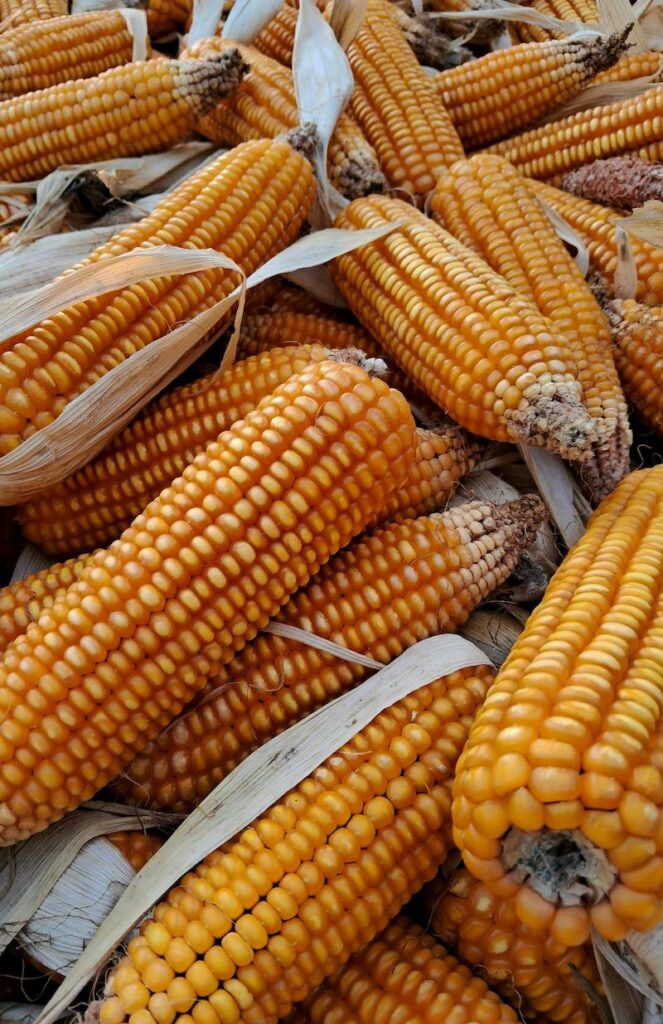
Cereals to produce ethanol

Good to know: read labels carefully! In a formula, the composition of the products is listed according to the decreasing proportion of the product. For example, a very liquid product (shampoo) will have "aqua" (water) listed first on its formula. If "alcohol" or "denatured alcohol" appears at the very end of the list, this probably means that it is not used pure but has been used to extract the plants contained in the product.
A little extra: Clauderer products contain no ethyl alcohol, apart from Serum N°10 which contains a small proportion made from 100 % sugar beet. The aim is to promote better penetration of the active ingredients.
Fatty alcohols: another type of alcohol used in cosmetics
What are fatty alcohols? Fatty alcohols are often found in hair care products and in many natural cosmetics. Which can make you fear the worst!
Ethyl alcohol isn't the only alcohol to be found in the products that form part of our hair routine. Glyceryl alcohol, cinnamyl alcohol, lauryl alcohol and stearyl alcohol, to name but a few, can give us cause for concern, as they often top the list of our natural hair care products.
It's true that this title can be a source of confusion: why alcohol, which is likely to be aggressive, rather than soothing, in a lotion designed to treat a sensitive, irritated scalp, as is the case with Clauderer N°3R lotion, for example?
In fact, we're not talking about the same thing at all! These "alcohols" from the plant world are in fact what we call "fatty alcohols", and they come in solid form, a bit like a vegetable wax, or like a thick oil. Without going into too much detail, fatty alcohols are organic compounds made up of a long chain of carbon atoms, with an even number of atoms when they are natural. Ethyl alcohol, on the other hand, is made up of a short chain of carbon atoms.
To be more precise, fatty alcohols are "unsaturated or branched straight-chain primary alcohols derived from natural fats/oils; include lauryl, stearyl and oleyl alcohols; oily liquids or waxy solids; generally contain an even number of carbon atoms and an alcohol group bonded to the terminal carbon. "Source: Fischer Scientific.
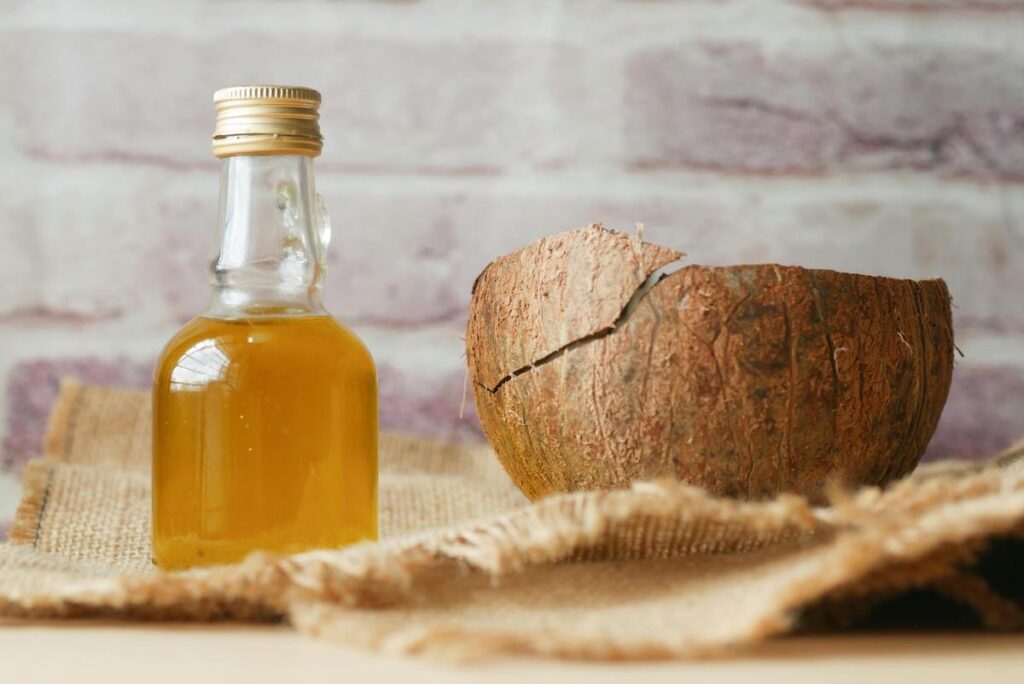
Coconut provides an excellent quality fatty alcohol, highly prized in natural cosmetics.
Why use fatty alcohols in hair cosmetics?
- Emollient properties: at Clauderer, it features prominently in the form of cetearyl alcohol in Lait N°3R and Crème N°25 because its softening properties help to soothe fragile, sensitive scalps prone to itching,Cetearyl Alcohol is a plant-based active ingredient that is essential in natural cosmetics. Mainly derived from coconut, cetearyl alcohol is an essential plant-based ingredient in natural cosmetics.
- Fatty alcohols also have emulsifying and stabilising properties in cosmetic formulas. This means that their presence allows non-miscible substances to fuse together. That's why Baume N°56 contains just the right proportion of fatty alcohols for a creamy formula that's easy to apply as a deep-care hair mask or as an after-shampoo detangling treatment, for Caucasian hair as well as textured Afro hair.
- A film-forming and protective action: fatty alcohols incorporated into a hair care formula gently coat and protect the hair fibre, much better than silicones and other synthetic alternatives! You'll find lauryl alcohol in Base curatif N°56 or cetearyl alcoohol in Creme N°26R, ideal for nourishing fine, colour-treated hair without weighing it down.

Get the facts to put your mind at rest: have beautiful hair with full knowledge of the facts
Ethyl or fatty alcohols have their place in natural cosmetic formulas. Their many properties make them indispensable in the preparation of effective hair care products, particularly fatty alcohols.
Tip: the word alcohol alone or supplemented by "denat" means ethyl (denatured) alcohol. If the word alcohol is preceded by a noun ending in -yl => it means a fatty alcohol of plant origin, to be enjoyed without moderation!
Jean-François Cabos is the creator of a unique hair care method based on the research he coordinated, which led to the publication of the book Hair, Roots of Life with Hélène Clauderer published by Robert Laffont (Collection "Réponses/ Santé").
